
AMWUA Blog
BY: AMWUA StaffArizona’s New Water Reality: Preparing for Historic Colorado River Cuts
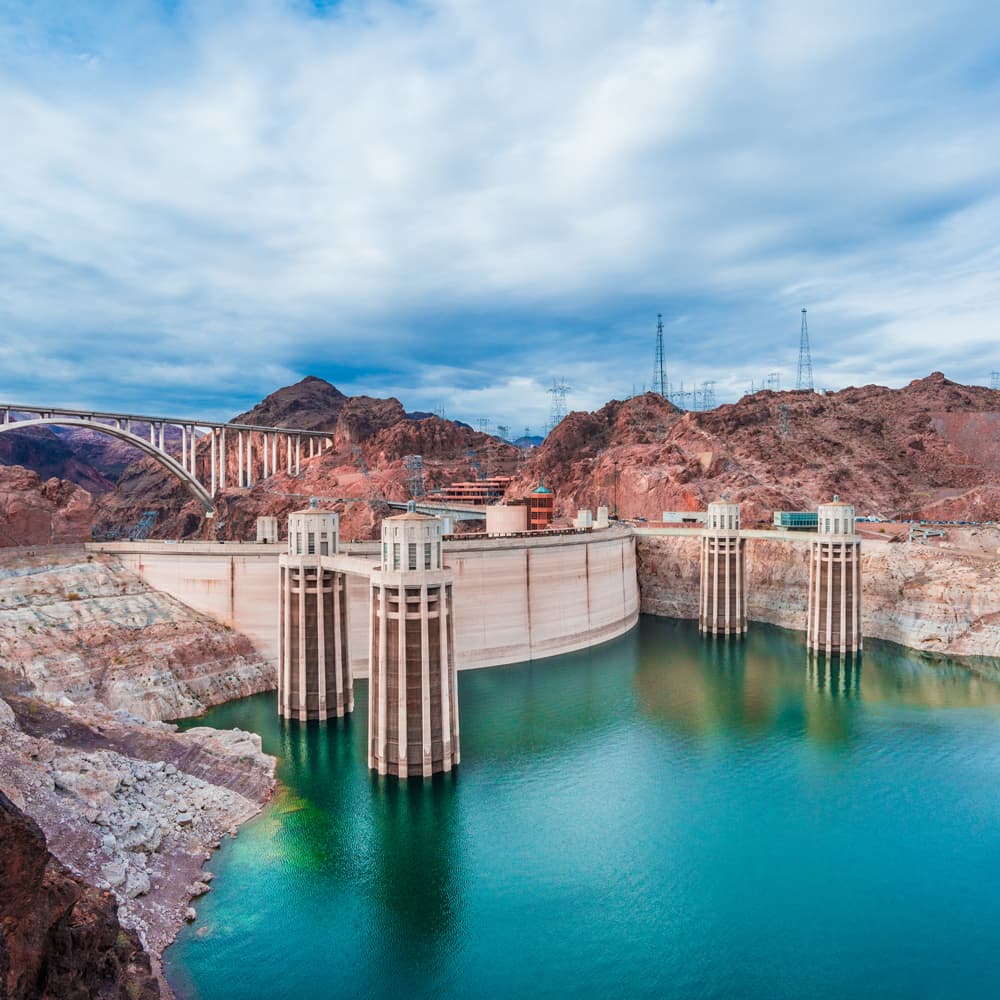
Arizona will experience its largest-ever reduction in Colorado River supply beginning in 2027.
The federal government has finally adopted a new framework for managing the Colorado River and a two-year delivery plan. The framework is intended to stabilize the Colorado River system, which has been plagued by drought since 2000. Unfortunately, the plan does not protect the river, and it leaves Arizona in a precarious position.
Right now, water levels at Lake Powell and Lake Mead, the river’s two biggest reservoirs, are so low that they might not be able to release water soon. The U.S. Bureau of Reclamation has put the responsibility for stabilizing the system on Arizona, California, and Nevada, but does not include Colorado, New Mexico, Utah, or Wyoming.
The bottom line is that Arizona is taking a major cut to one of its most important water supplies – something that has never happened to this extent, and even bigger cuts could happen in the future.
What the federal decision actually does and does not do
- For 2027 and 2028, the numbers are now finalized. Reclamation is using a proposal from Arizona, California, and Nevada that requires 1.25 million acre-feet of reductions in Colorado River deliveries to the Lower Basin states in each of the next two years. Arizona's share is 760,000 acre-feet—up to a 20% reduction to municipal providers’ supply from the Central Arizona Project (CAP), which delivers Colorado River water to the Phoenix and Tucson areas. (Without California’s willingness to take reductions, Arizona would face the brunt of this reduction.) The three states are also expected to voluntarily store at least an additional 700,000 acre-feet in Lake Mead over two years.
- For 2029 through 2036, the numbers are not yet finalized. Rather than fixing reductions for the full decade, the federal government established a ten-year framework in which deliveries are determined every two years. Under this framework, Reclamation could require up to 3 million acre-feet of reduction from the Lower Basin States, in priority order. Being junior priority, CAP would be the first to face those cuts. That means deeper reductions remain possible for Arizona.
The hard reality is that hydrology is not improving and is on track to undermine the federal government’s plan. The Basin has been drying for more than a quarter century, and conditions worsened again in 2026 after the lowest snowpack on record. Lake Powell will begin the water year at an elevation that prioritizes protecting the dam infrastructure, limiting how much water will be released into Lake Mead.
What does that mean for Arizona?
We need to accept that the Colorado River is a less reliable water source. In this new era, we need to find a path forward to secure other water supplies while tightening how we use our current supplies.
If we’re lucky, cities will see no more than 20% reduction in Colorado River water in 2027 and 2028. Yet Reclamation’s 10-year framework is structured so that the federal government would allow the CAP to go dry. Even if Reclamation adjusted its plan to be more equitable, we would still face greater reductions because the river is producing less water.
How the AMWUA Cities are responding
The scale and timing of these reductions are more severe than anticipated even three years ago. The AMWUA cities have been preparing regardless of the federal government’s decision. Some of those collective efforts include:
- Expanding treatment plants and upgrading infrastructure.
- Participating in the potential expansion of Bartlett Reservoir to capture and store additional Verde River water.
- Investing in technology-based initiatives like Advanced Water Purification (AWP) to create a local water source that is efficient and drought-resistant.
- Maintaining existing wells and preparing new wells to recover water stored underground, which serves as an important reserve during shortages.
- Investing in Advanced Metering Infrastructure (known as AMI) to help customers monitor water usage and detect leaks.
- Adopting policies and codes to ensure efficient water use is prioritized across their communities.
- Updating shortage plans, increasing conservation and demand management programs, while working to improve their own efficiencies to lead by example.
What it means for all of us
Arizona will receive significantly less Colorado River water starting in 2027. That's real, and it matters. The AMWUA cities have spent decades — not months — preparing for exactly this kind of reduction. And right now, a shortage on the Colorado River does not mean a shortage at your tap, but it does mean we will all need to learn to live with less.
To ensure there is never a shortage at your tap, we must develop new water sources to ensure Arizona’s long-term water security, which is vital to our communities’ resilience. The AMWUA cities cannot do this on their own because new water sources will cost more, and that cost cannot be reflected solely in future water rates.
We need sizeable federal relief for this Colorado River crisis. Arizona also needs to establish a dedicated revenue source, as Texas did last year. This support is essential for developing new water sources to replace the water we are losing from the Colorado River. These investments are crucial to enhancing our water security now and in the future, enabling us to thrive in the desert despite our new reality of having less Colorado River water.
For 57 years, the Arizona Municipal Water Users Association has worked to protect our member cities' ability to provide assured, safe, and sustainable water supplies to their communities — Avondale, Chandler, Gilbert, Glendale, Goodyear, Mesa, Peoria, Phoenix, Scottsdale, and Tempe. For more information on water, visit amwua.org.