
AMWUA Blog
BY: AMWUA StaffHow the AMWUA Cities Have Been Preparing for a Smaller Colorado River
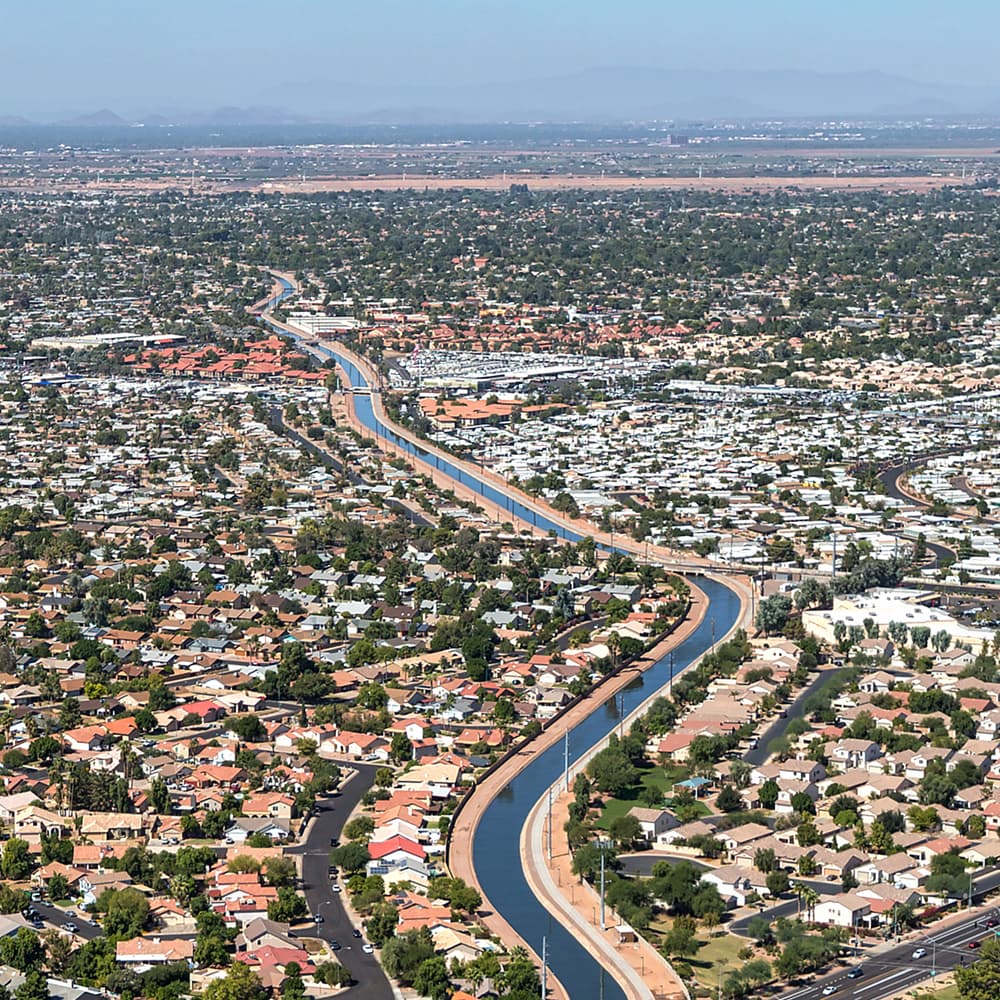
Arizona is entering a new era of having less Colorado River water. Federal officials are finalizing operating rules for 2027 through 2036, which are to bring deeper, more permanent reductions to the state's supply and to Central Arizona Project (CAP) water. The AMWUA cities have long relied on CAP deliveries, which sit at the center of that risk. What isn't widely known is how far ahead our member cities have been preparing for this moment.
The ten AMWUA cities provide water to 3.7 million people — over half of Arizona's population — while using only 11% of the state's water supply. This is no coincidence; it results from decades of intentional planning to protect water resources, modernize essential infrastructure, and adapt to climate change and rapid population growth. Their current initiatives are built on three key strategic pillars: Efficiency, Resilience, and Technology.
Below is a sample of initiatives that exemplify these priorities and demonstrate how the AMWUA cities are proactively laying the groundwork for a secure water future.
Reducing Demand Before Mandated Cuts Occur
As CAP allocations shrink, every gallon saved through efficiency is a gallon that doesn't need to be replaced from a shrinking river. AMWUA cities have made efficiency their primary defense because it costs far less than developing new supply.
- Data-Driven Savings: Advanced Metering Infrastructure (AMI) gives customers detailed, near-real-time usage data, so leaks and waste are caught before they compound a shortfall rather than after.
- Leak Detection & Control: Leak detection programs and smart irrigation timers reduce physical water losses — water lost before it ever reaches a customer — while also lowering bills.
- Rebates & Turf/Landscape Conversions: Rebates for grass removal and landscape conversion, offered to homeowners, HOAs, and businesses, cut peak summer demand, the period when Colorado River supply pressure is greatest.
- Municipal Water Audits: Cities audit their own facilities, parks, and operations first, holding municipal water use to the same standard they ask of residents.
Reducing Reliance on the Colorado River
Efficiency slows demand, but it doesn't replace lost CAP supply. That's the job of local, drought-independent water — supplies that don't fluctuate with Lake Mead's elevation. That’s why the AMWUA cities are expanding their efforts to develop climate-independent water supplies to ensure the resilience, capacity, and safety of their water systems now and in the future.
- Expanding Reuse: Investing in advanced purified water treatment technology to create a highly efficient, drought-resistant local water source - the next logical step in sustainable water management.
- Maximizing Reuse: Utilizing reclaimed water for landscaping, agricultural watering, aquifer recharge, and industrial cooling (e.g., Palo Verde Nuclear Plant).
Developing Rules to be Proactive
The AMWUA cities support long-term water demand goals by adopting municipal ordinances and policies that promote responsible growth.
- Landscape Design Requirements: Codes require native, low-water-use plants and efficient irrigation, limit turf square footage, and eliminate non-functional grass in new HOA and multi-family developments.
- Commercial & Industrial Standards: High-water-use landscaping is restricted on commercial and industrial sites, extending water-wise practices beyond residential neighborhoods.
- Growth-Pays-Its-Way Policies: Large-user ordinances and water-allocation policies require major new developments to secure their own water supply once they exceed set thresholds — protecting existing customers from having to absorb the cost of growth.
- Efficiency Standards & Codes: Plumbing fixture and construction standards ensure every new building uses less water than the one it replaces.
Arizona remains vulnerable as the federal government finalizes Colorado River operating rules for 2027 and beyond, and no level of local preparation can completely remove that risk. However, the AMWUA cities are not at ground zero. More will be needed, especially investing in new water supplies to cope with the long-term ramifications of having less Colorado River. Yet, years of investment in efficiency, local water sources, and strategic policies are a good start for dealing with water reductions in 2027. We continue to work toward a future that minimizes the impact of a reduced Colorado River allocation and protects our water security.
For 57 years, the Arizona Municipal Water Users Association has worked to protect our member cities' ability to provide assured, safe, and sustainable water supplies to their communities — Avondale, Chandler, Gilbert, Glendale, Goodyear, Mesa, Peoria, Phoenix, Scottsdale, and Tempe. For more information, visit amwua.org.