
AMWUA Blog
BY: AMWUA StaffLessons from Session: How Lawmakers Prepared for Our Water Future
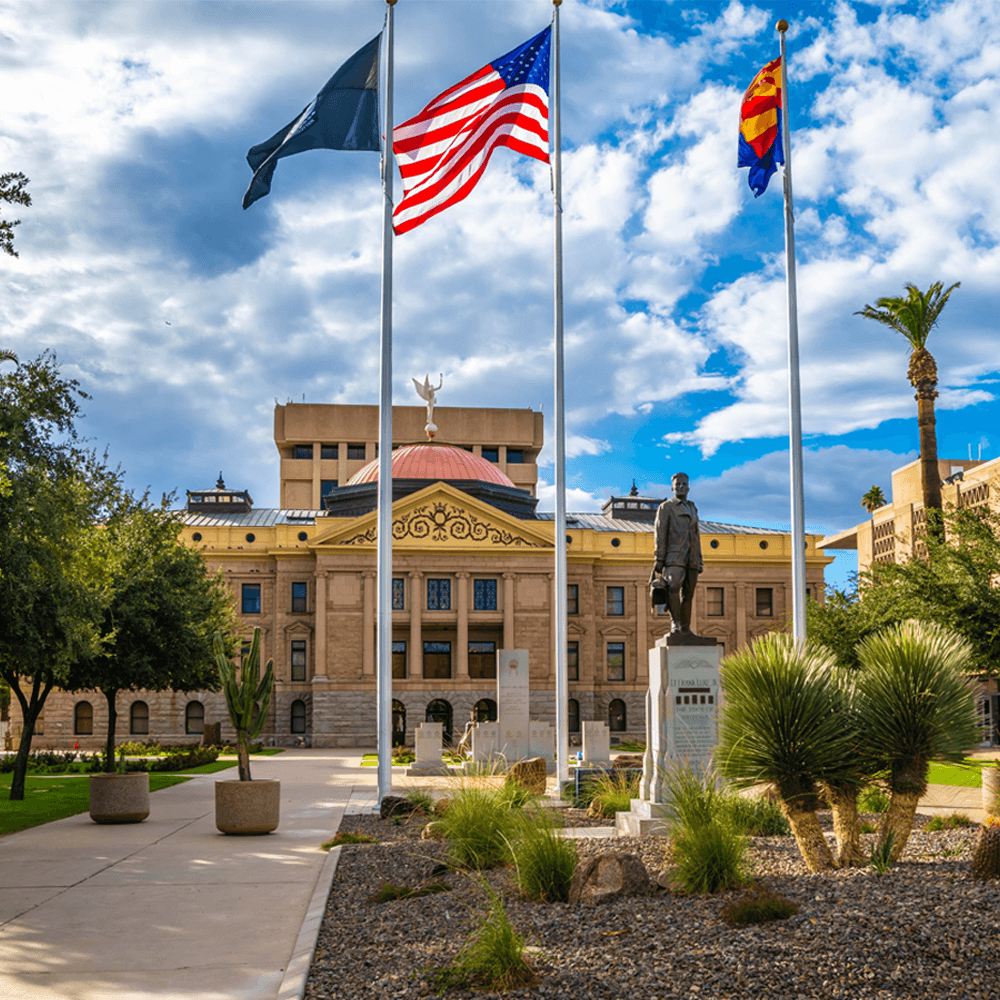
Now that the 2026 legislative session has concluded, it’s an opportune moment to review some of the 122 water-related bills introduced this year. Water remains a key focus at the State Capitol, with Arizonans paying close attention.
A recent poll showed that 94% of Arizona voters want legislators to make water security a top priority. Seven out of ten even support immediate investments in Arizona’s water future, even if it means putting other priorities—like taxes or education—on hold. With looming cuts to Colorado River water supplies, voters are calling for action. So, how did lawmakers respond this session?
Too many proposed bills could have made it harder for cities to provide reliable water service to millions of Arizonans.
- Three separate pieces of legislation attempted to prevent municipalities from raising rates for four years, with two versions designed to circumvent the governor’s veto pen (HB 4030, HCR 2016, and HCR 2052).
- An amended version of HB 2027 jeopardized municipal and private water providers’ Designations of 100-year Assured Water Supply and undermined the Central Arizona Groundwater Replenishment District’s (CAGRD) ability to replenish groundwater that had been pumped.
- Other proposals included restricting cities’ ability to store water underground (HB 2099), taking away their control to set rates (HB 2328), limiting where Colorado River water could replenish groundwater that had been pumped (HB 2263), and placing unrealistic replenishment requirements on CAGRD (SB 1288).
Each of these bills would have made it harder—not easier—for cities to secure water for their residents, especially as we are facing Colorado River reductions next year. Fortunately, advocacy from AMWUA cities and others helped defeat all of these measures before they reached the Governor.
Not all the news was negative. Some bills focused on Arizona’s long-term water future and its role among the seven Basin States.
- In January, lawmakers introduced HCR 2038 to support a seven-state agreement on Colorado River operations after 2026. But by June, as it became clear there would not be a consensus among the seven Colorado River Basin states, the legislature shifted gears, boosting the state’s legal fund (HB 2116) in case of future lawsuits.
- Lawmakers also tried to help communities with pending Certificates of Assured Water Supply by requiring long-term storage credits (HB 2094). But since the bill didn’t identify where the extra water would come from, it wasn’t workable and didn’t move forward.
- Two more bills (HB 2757 and HB 2758) aimed to clarify rules for moving groundwater from the Butler and McMullen Valleys. While neither passed, they sparked important conversations about having water supplies available to offset Colorado River reductions for Valley water users.
On a brighter note, several AMWUA-backed bills made positive strides for water security.
- SB 1448 provides stronger protections for utility workers, including municipal water employees, while they perform their daily duties. This law allows utility professionals to prioritize public service without compromising their safety.
- SB 1560 increased water supply development opportunities for rural communities.
- HB 4026 extended a program that lets qualifying municipalities invest more in critical infrastructure, including water and wastewater systems.
All these bills were passed, either through the FY27 budget or by being signed into law.
The final budget included many AMWUA priorities, like protecting WIFA’s Long-Term Augmentation fund and adding $6 million to the Colorado River litigation fund (raising it to $9 million). Some priorities didn’t make the cut, though: a $20 million reduction to WIFA’s rural Water Supply Development Fund and no clarification of ADEQ’s authority over Advanced Water Purification treatment plants.
While some legislation moved the state in the right direction, more needs to be done to secure Arizona’s water future after 2026. With major Colorado River cuts just months away, Arizona must invest in new water supplies to protect residents, businesses, and the state’s economy. Voters know that water security is essential. In 2027 and beyond, lawmakers need to find dedicated funding and solutions to keep Arizona resilient and prosperous.
Our full legislative summary is available HERE.
For 57 years, the Arizona Municipal Water Users Association has worked to protect our member cities' ability to provide assured, safe, and sustainable water supplies to their communities — Avondale, Chandler, Gilbert, Glendale, Goodyear, Mesa, Peoria, Phoenix, Scottsdale, and Tempe. For more information, visit amwua.org.