
AMWUA Blog
BY: AMWUA StaffMonsoon Season and Stormwater: How You Can Help Prevent Pollution
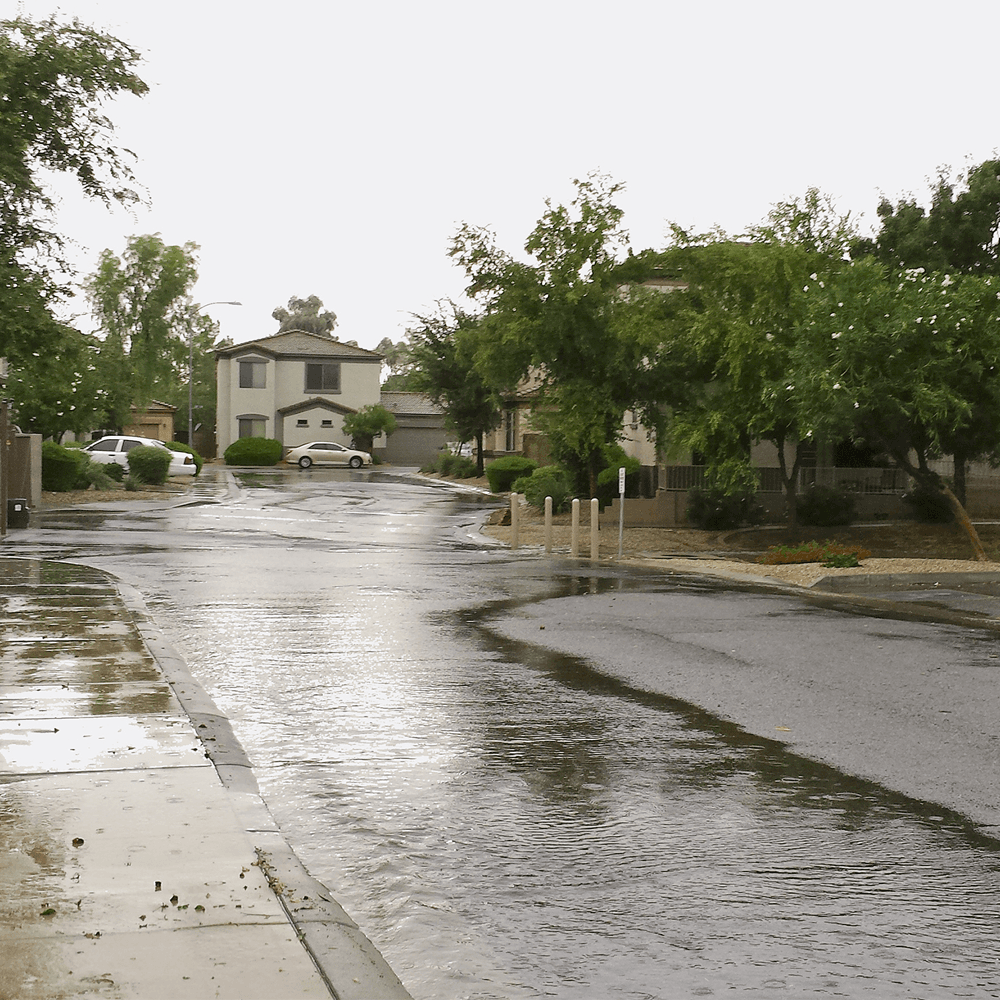
With monsoon season now officially upon us, we eagerly and desperately await significant rainfall, which will add much-needed moisture to our arid landscape, refresh the air, reduce dust, and provide some relief to those battling wildfires.
While any rain is welcome in the desert, monsoon storms can bring heavy downpours that cause water to rush over driveways, sidewalks, streets, and parking lots, raising the risk of flooding. These strong flows can also carry pollutants like trash, oil, pet waste, and pesticides into storm drains, which then contaminate our local washes, parks, streams, and wetlands.
Stormwater runoff is a major cause of water pollution in the United States. Some debris, like trash and litter, is easy to see, but rain also washes away less visible and more harmful pollutants. These include oil, grease, dissolved metals like lead and copper, and extra sediment from oily driveways, construction sites, and roads.
Not all water is treated the same way. Cities have two separate water systems. The sanitary sewer system collects wastewater from sinks, toilets, showers, and washing machines, sending it to treatment plants. Storm drains, on the other hand, carry untreated water straight into washes, parks, and rivers. The stormwater system includes ditches, culverts, ponds, lakes, curbs, gutters, wetlands, and rain gardens, but it does not treat the water at any point. That’s why it’s important for everyone to help protect our water and environment by remembering: “Only rain in the storm drain.”
Learning some basic facts and helpful tips about stormwater runoff helps us see how contaminated rainwater affects our environment, such as:
- Pet waste
Pick up pet waste with a plastic bag and put it in the trash. Pet waste has bacteria and other germs that are harmful to our water. - Automobile Maintenance
Take care of your vehicle to prevent leaks. Use drip pans to catch any fluids. Clean up leaks and spills right away with something absorbent like kitty litter or sand, then sweep it up and throw it away properly. Just one quart of motor oil can pollute more than 250,000 gallons of water. - Vehicle Washing
If you can, use a commercial or self-service car wash because it uses less water. If you wash your car at home, use a bucket and a phosphate-free, biodegradable soap. Try to direct the wash water onto your landscaping when possible, or pour it down a sink or toilet. - Lawn Care
Use pesticides, fertilizers, and other lawn care products only as needed and always follow the label instructions. Overwatering can wash pollutants into rivers and washes. Don’t sweep or wash yard debris into the street, since it can clog storm drains and cause flooding. - Household Chemicals
Store chemicals in labeled, closed containers. Dispose of leftover household chemicals like paint, used oil, cleaners, and yard products properly or recycle them. Take these items to a Household Hazardous Waste site or collection event. - Spill Management
If we all follow these simple habits at home, we can keep common pollutants off the ground and out of our stormwater. Clean runoff is something our whole community can work toward, and it starts before the rain even falls.
For 57 years, the Arizona Municipal Water Users Association has worked to protect our member cities' ability to provide assured, safe, and sustainable water supplies to their communities — Avondale, Chandler, Gilbert, Glendale, Goodyear, Mesa, Peoria, Phoenix, Scottsdale, and Tempe. For more information, visit amwua.org.