
AMWUA Blog
BY: AMWUA StaffPreventing Forest Fires Brings Many Benefits, Including Protecting Our Water
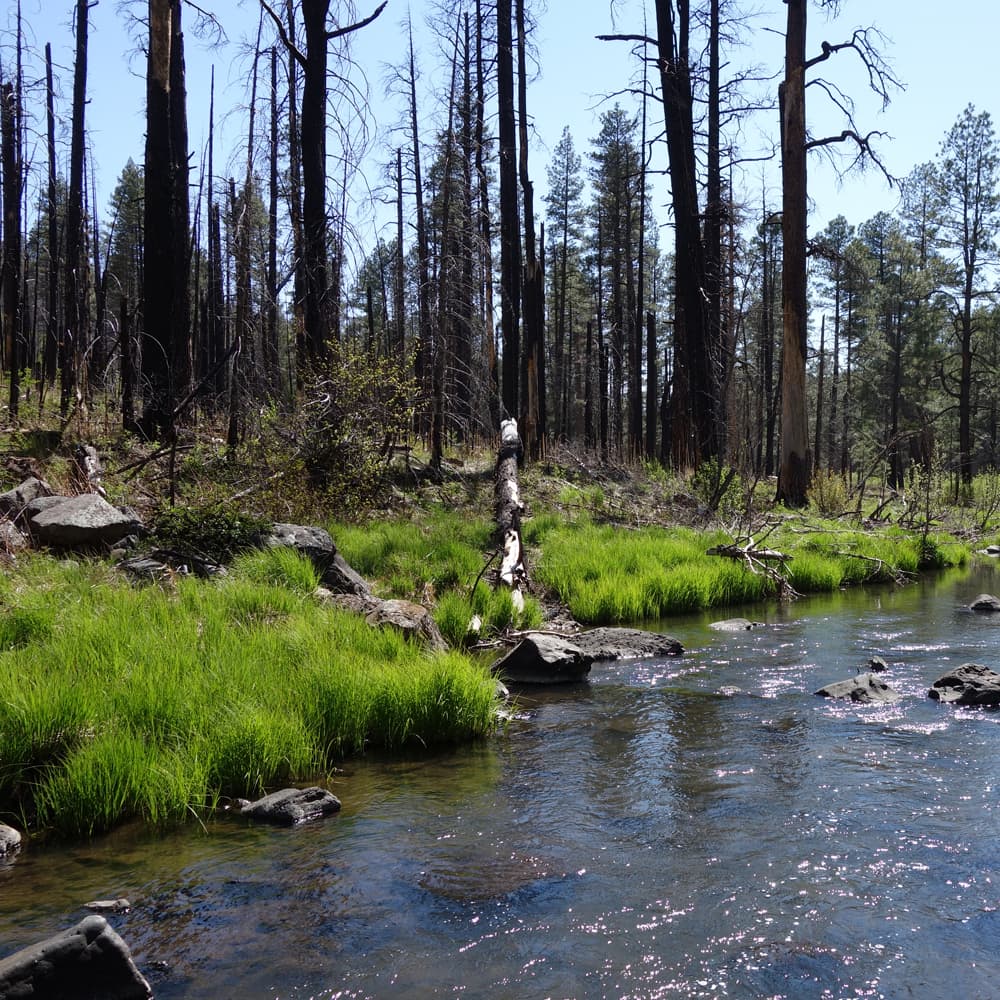
As temperatures rise, many Valley residents head north for cooler air and outdoor fun. But that escape comes with responsibility – use extreme caution with fire, because what happens in Arizona's forests affects our water supply.
Wildfires destroy vegetation, leaving ash, metals, organic matter, and sediment to flow into rivers and accumulate in reservoirs. Damage to the watershed affects both water quality and the sustainability of a major water source for the Valley. Fire risk is now a year-round threat, but summer temperatures and drought conditions further elevate it.
A 13,000-square-mile watershed north and east of the Valley channels snowmelt and rain into streams and rivers, then to Lake Roosevelt and other SRP reservoirs—a key water source for the AMWUA cities. Since 2000, over 3.8 million acres have burned in and near this watershed. In 2024, fires increased by 15% in one year. By spring 2025, over 104,000 acres had burned.
This watershed is critical to desert life. We are in a historic drought, and wildfires further threaten the quality and quantity of our water. Persistent drought reduces snowpack and river inflows into the Salt and Verde. Drier forests also burn faster and hotter.
A healthy forest stores and filters water. Its canopy slows snowmelt, providing the Valley with a steady water supply during peak-demand months. Burned forests expose snow to more sun, causing faster melt, more flooding, and sending debris into reservoirs—reducing capacity and water quality.
Forest thinning—removing small trees and dense brush—is a key tool for prevention. Instead of cleaning up after wildfires, thinning returns forests to natural densities. It helps healthier trees thrive and allows more rainfall and snowmelt to soak into the soil rather than rush off as floods. Thinning can also keep ground fires from climbing into tree canopies, which are much harder to control.
SRP aims to thin 800,000 acres by 2035 with partners, education, and industry support. In 2024, Apple joined SRP’s Resilient Water and Forest Initiative—the largest investment so far—to restore nearly 30,000 acres north of Payson over the next decade. This partnership is expected to bring nearly 2 billion gallons in water benefits over 20 years. In July 2025, SRP extended its partnership with the Arizona Department of Forestry and Fire Management through 2030, having already completed 25 thinning projects that restored 35,000 acres and removed over 129,000 tons of timber. Most recently, in March 2026, SRP partnered with the National Forest Foundation for $500,000 per year to thin an additional 3,600 acres in the Tonto National Forest, while NAU research teams have confirmed the success of biocrust restoration in protecting burned watershed areas and improving water quality.
The AMWUA cities have long supported these efforts, contributing funding to SRP, the Nature Conservancy, and others working to protect the watershed and reduce the risk of catastrophic fires. We all play a role in protecting our forests. Whether you’re visiting Arizona’s State Parks, hiking in the high country, or using fire at home, commit to extreme caution. Our forests and our water are deeply connected. Protecting one means protecting the other, and that starts with each of us.
For 57 years, the Arizona Municipal Water Users Association has worked to protect our member cities' ability to provide assured, safe, and sustainable water supplies to their communities — Avondale, Chandler, Gilbert, Glendale, Goodyear, Mesa, Peoria, Phoenix, Scottsdale, and Tempe. For more information, visit amwua.org.