
AMWUA Blog
BY: AMWUA StaffUnderstanding the Colorado River Crisis
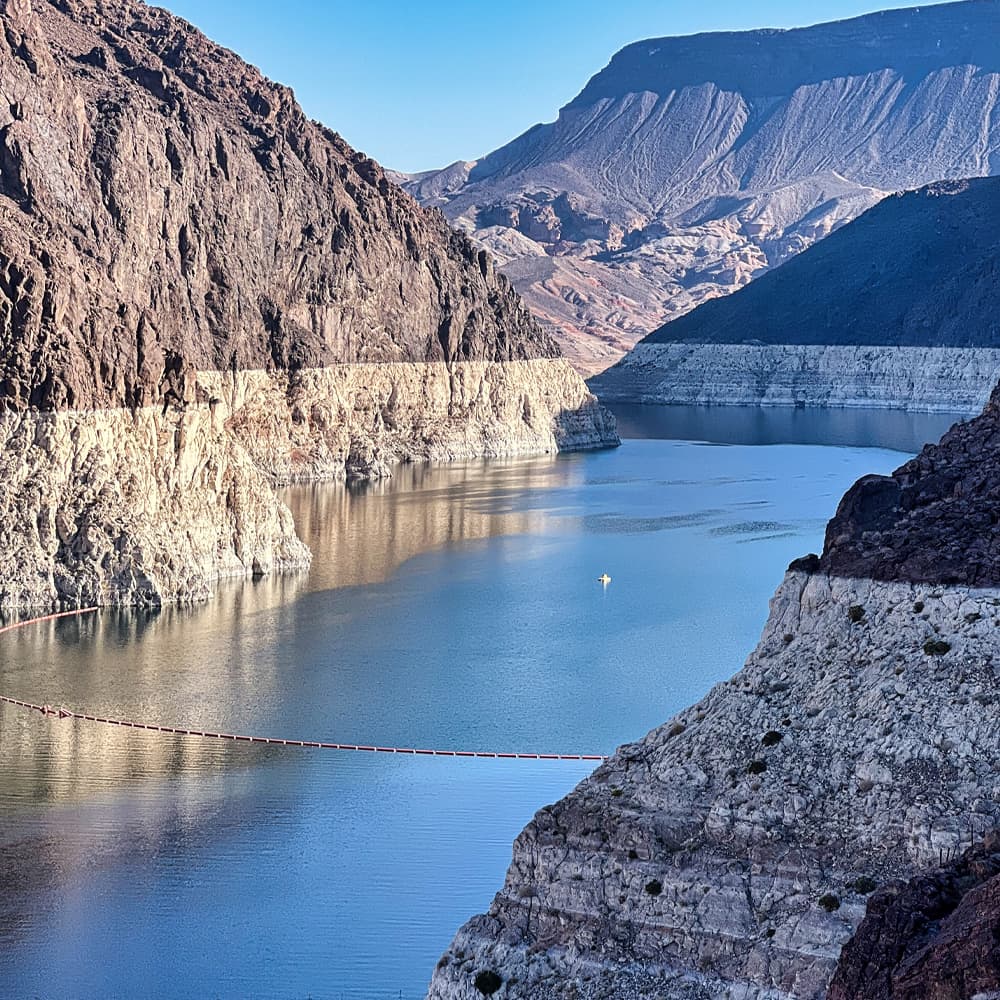
The Colorado River crisis continues to grow. With a clearer understanding of the river's role and its current complex challenges, it’s evident why this topic is in the spotlight and why efforts to address these issues are so important.
Why the Colorado River Matters
The Colorado River is the largest renewable water source in the southwestern United States, supplying water to approximately 43 million people, including 30 tribal communities, while supporting urban centers, agricultural activities, and ecosystems throughout the region. The river generates nearly $4 trillion in economic activity each year, underscoring its critical importance to the nation's overall economy.
In Arizona, the river is a water source for approximately 80% of the state's population and plays a crucial role in supporting the state’s economic activities, including agriculture, industry, and municipal needs.
How the River Is Managed
Seven states are divided into two basins: Arizona, California, and Nevada are part of the Lower Basin, while Colorado, New Mexico, Utah, and Wyoming make up the Upper Basin. These states, along with Mexico, rely on the Colorado River for agriculture, municipal use, industry, and ecosystems. Water rights and dam operations are governed by the “Law of the River," a comprehensive set of interstate compacts, agreements, treaties, laws, and regulations developed over decades to manage the river's allocation and use. The Colorado River is managed by the U.S. Bureau of Reclamation, a federal agency responsible for overseeing water resource development and distribution in the western United States.
The federal government’s current operating guidelines for managing the river expire at the end of 2026.
The Problem
A 25-year megadrought—the worst in over 1,200 years—combined with aridification of the Basin, has decreased the river's flow and brought the system to the edge. Lake Mead and Lake Powell, the Basin's two largest reservoirs, are each less than a third full (33% capacity), far below healthy levels. This threatens water supplies, hydropower production, and river ecosystems.
Compounding the crisis, the water allocated to the Basin States over 100 years ago was based on overestimated river flows. Today, the river's flow is 20% lower than in 2000 and is likely to decrease further, highlighting the urgent need for all users in all states to cut water use to protect the entire system.
What Has Helped
To protect Lake Mead from falling to critically low levels, California, Arizona, and Nevada surpassed their combined goal of conserving 3 million acre-feet of water in Lake Mead by 2026—achieving the target a full year early. This has been done with required shortage reductions. For more than a decade, the Lower Basin states and Mexico have voluntarily contributed nearly 157 feet to Lake Mead.
Despite population growth over the past 40 years, major cities use roughly the same amount of water as in the 1990s, while agricultural users have invested millions in water-saving technologies to produce more with less water. The Lower Basin is prepared to continue reducing water consumption to help stabilize the Colorado River system.
Planning for the Future
Without a consensus among the Basin States on how to manage the river after 2026, when the current operating guidelines expire, municipal water providers, agricultural growers, and tribes do not know how much Colorado River water they will receive in 2027. Even with a new federal deadline of February 14th looming, it does appear a consensus agreement will be reached.
While water managers cannot control natural conditions, they can manage existing supplies, which needs to be done throughout the Basin. The AMWUA cities are actively planning for a future with less Colorado River water, but this will require large investments and higher costs.
For over four decades, the AMWUA cities have invested heavily in utilizing Colorado River water to diversify their water portfolios and reduce reliance on groundwater. Planning for at least a 20% reduction now requires new, immediate investments in developing alternative supplies—efforts that will offset reductions, protect the vulnerable aquifer, and ensure that new growth is not solely dependent on groundwater.
The Path Forward
The Colorado River crisis isn’t just a water problem—it’s an economic, environmental, and community challenge. Each delay in deciding how the river will be managed after 2026 exacerbates the issue and intensifies the consequences. A fair, sustainable agreement among all seven states is the only way to secure the river’s future—and ours.
Learn more about the Colorado River’s importance through the Coalition for Protecting Arizona’s Lifeline, a nonpartisan alliance of leaders dedicated to educating, advocating, and emphasizing the significance of long-term water security and economic resilience in our state. www.ProtectingArizonasLifeline.com .