AMWUA Blog
BY: AMWUA StaffWhy Advanced Water Purification Is Important for Our Desert Communities
Local water providers are exploring innovative methods to extend their water supplies. Advanced water purification technology offers a dependable and cost-efficient solution to optimize recycled water, which is especially beneficial amid drought conditions, Colorado River shortages, and groundwater challenges. This technology creates a reliable, drought-resistant supply of clean water for communities now and in the future.
While this is an important step forward for our desert communities, some people have concerns about drinking purified recycled water, often because the process is not well understood. Let’s walk through how advanced water purification works, and why it’s safe.
Water recycling is not new
- For many years, water providers have collected and treated wastewater so it can be used again. After treatment, this water is released into basins, rivers, or lakes, then taken out, treated again, and sent to homes and businesses. This process is known as indirect potable reuse.
- NASA has used advanced water purification, also called direct potable reuse, for more than 50 years. Cities like Singapore, El Paso, and Orange County have safely relied on this technology for years. Now, several communities in the Phoenix area will soon join them, benefiting from a safe, reliable, and renewable water supply.
- The science and technology behind water treatment have shaped modern life, ensuring safe, clean water for drinking, sanitation, and industry. Today, advanced water purification builds on this foundation, using state-of-the-art techniques for even greater safety and purity.
Myth-Busting: “Toilet to Tap”
- The phrase "toilet to tap" might make for catchy headlines, but it’s not reality. Water that leaves your home goes through multiple advanced treatment steps—like microfiltration, reverse osmosis, and ultraviolet disinfection. These processes remove contaminants at the molecular level, including viruses, medicines, and microplastics. In some systems, water is also filtered through natural areas or stored in aquifers before being reused. The result is exceptionally pure water that meets or exceeds the highest safety standards.
- It’s a common misconception that water from rivers and lakes is cleaner than recycled water. In fact, surface water has always been carefully treated because it can contain waste, runoff, and contaminants from many sources. That’s why all drinking water is treated before it reaches your home—regardless of its source.
AWP is the next logical and necessary step
- Advanced water purification is safe and reliable. Every batch of purified water is rigorously tested to ensure it meets or exceeds strict state and federal standards. Water agencies and independent labs monitor quality at every step, so you can trust the safety of your water.
- Advanced water purification is also cost-effective at scale. For example, the planned regional facility in the Phoenix area will treat about 80 million gallons per day—far more than indirect potable reuse systems can handle. Additionally, it eliminates the need for storage and recovery, resulting in further savings. AWP would not require expanding the separate infrastructure for conveying non-potable water to certain end-users, such as golf courses and industrial facilities.
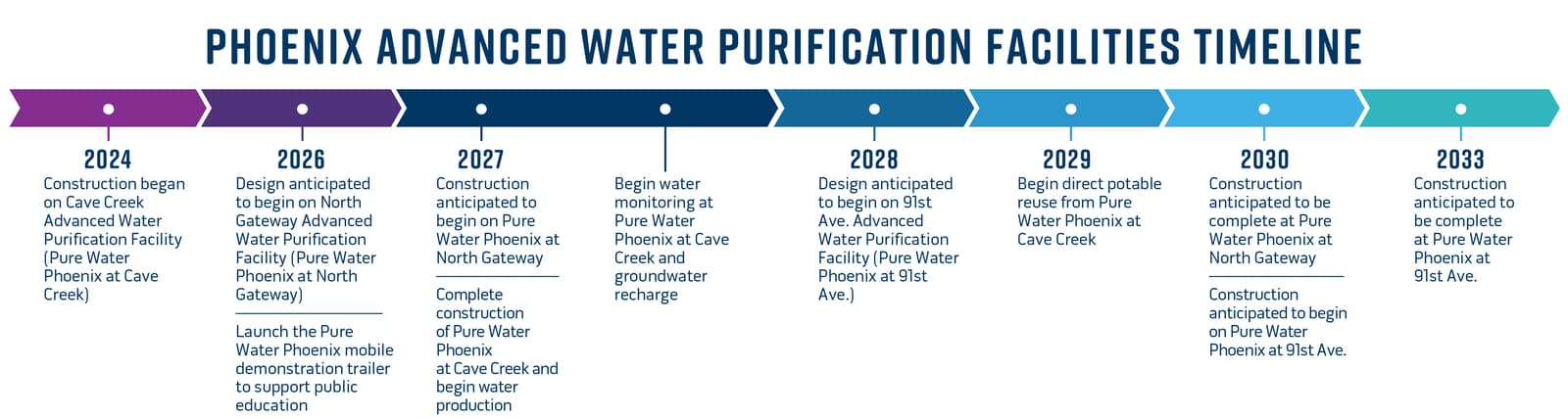
Advanced water purification is not just an idea for the future—it’s already in action. This additional water supply will help offset reductions in Colorado River water by providing a safe, drought-resistant, and reliable source of drinking water.
The City of Phoenix has reached a major milestone: construction is halfway done on the $300 million Cave Creek Water Reclamation Plant—Arizona’s first full-capacity advanced water purification facility. Learn more about the project HERE.