
AMWUA Blog
BY: AMWUA StaffColorado River's New Plan Buys Arizona Time, but It’s Not a Solution
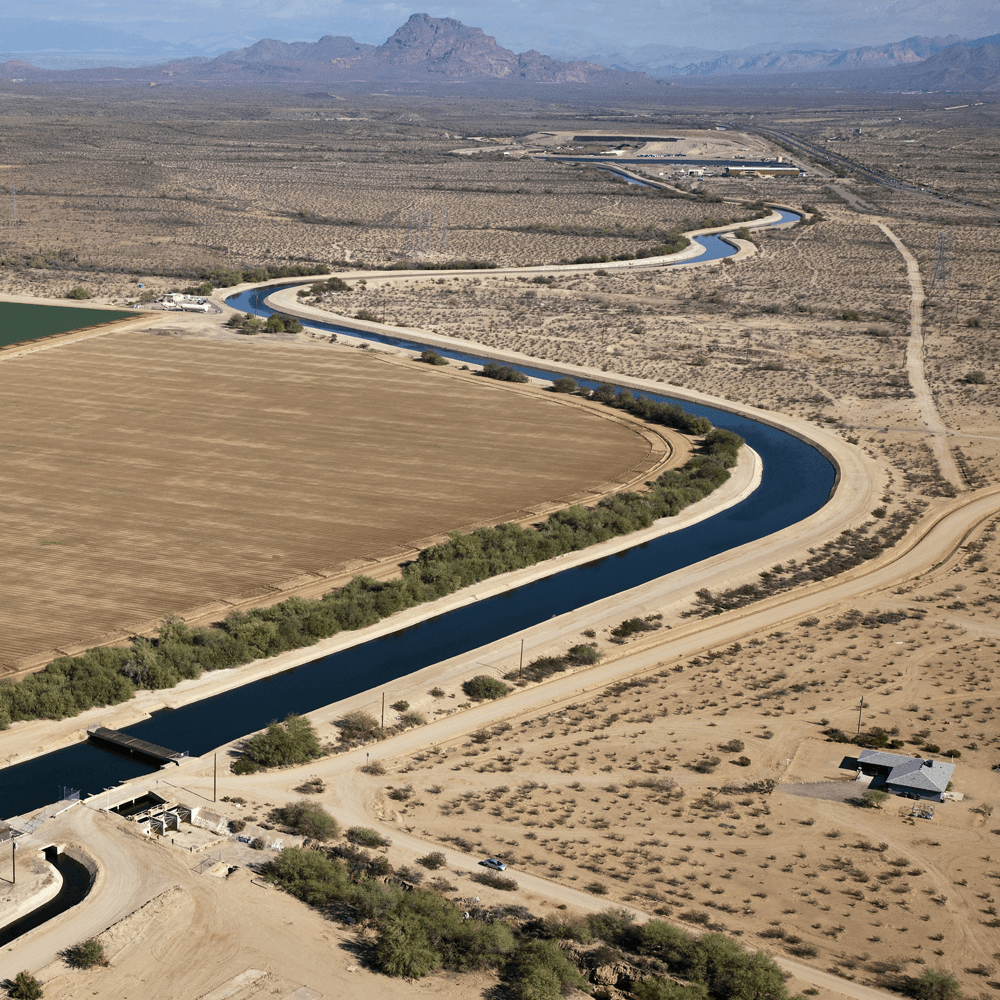
The Colorado River, a vital resource for the national economy, is in crisis. The U.S. Bureau of Reclamation’s new 10-year management plan does little to ensure long-term water reliability for about 35 million users of the river, especially in Arizona. The Central Arizona Project (CAP), which serves the Phoenix and Tucson areas, faces the highest risk among Colorado River water users under the new federal 10-year framework.
Last week, the U.S. Bureau of Reclamation released its Final Environmental Impact Statement (FEIS), selecting a preferred alternative to manage the Colorado River from 2027 to 2036. The plan establishes an adaptive framework: operations at Lake Powell and Lake Mead will be reviewed and adjusted every two years to address changing conditions, within defined limits. These limits allow for up to 3 million acre-feet of potential Lower Basin shortages, with reductions allocated by water-rights priority. As a junior-priority holder, CAP is first to face cuts. Up to 3 million acre-feet in annual reductions could be imposed on the Lower Basin States by priority.
Less severe cuts now, but no long-term solutions
For 2027 and 2028, Reclamation intends to use a proposal from Arizona, California, and Nevada: a shared 1.5 million acre-foot reduction across the three states. That equates to a 760,000 acre-foot cut to Arizona each year, which will reduce CAP M&I subcontracts by 20%. Plus, Nevada will leave an additional 100,000 acre-feet, and Arizona and California each will leave at least an additional 300,000 acre-feet in Lake Mead through 2028.
However, this is only a temporary measure. Despite four years of negotiations, the federal government and the seven Basin states failed to reach a long-term agreement to stabilize the river.
Our FEIS Breakdown
- Reclamation has chosen to respond reactively rather than proactively to the dismal hydrology projected in the FEIS. According to its own modeling, none of the alternatives—including the preferred alternative—will stabilize the system from reaching dead pool at Lake Powell and/or Lake Mead if we continue to face dry years. In other words, Reclamation has not met the moment, leaving us at risk of cycling from crisis to crisis on the river.
- Instead of taking a bold, holistic approach, Reclamation has placed the entire burden of stabilizing the system on the Lower Basin States—with the bulk falling on CAP users. Yet even if Reclamation adopted a more equitable approach, the FEIS modeling shows that the reductions necessary to stabilize the Colorado River would still mean major cuts for Arizona.
- Although the initial two-year plan softens the blow, the FEIS modeling indicates that the CAP will likely face at least 40% reductions over the next decade – over twice as much as what’s proposed for 2027 and 2028. We cannot take the next two years for granted. We need to prepare for considerably less Colorado River water, including the possibility of no CAP deliveries.
- The FEIS confirms what had been suspected: that Reclamation’s decisions about Lake Powell releases are based on concerns about the ability of Glen Canyon Dam’s outlet works pipes to sustain water releases over extended periods. Although this issue has been known for many years, Reclamation has yet to develop a plan to address it. Instead, to avoid compromising the dam’s infrastructure, Reclamation’s preferred alternative will not allow Lake Powell to fall below 3,500 feet, which means less water will flow to Lake Mead, causing its storage to decrease more rapidly.
How the AMWUA Cities Are Responding
The scale and timing of these reductions are more severe than anticipated even three years ago. The AMWUA cities have been preparing regardless of the final federal decision:
- Securing new water sources and funding to expand treatment plants and upgrade infrastructure, such as advanced metering (known as AMI), to help customers monitor water usage and detect leaks.
- Participating in the potential expansion of Bartlett Reservoir to capture and store additional Verde River water.
- Investing in technology-based initiatives like Advanced Water Purification (AWP) to create a local water source that is efficient and drought-resistant.
- Maintaining existing and preparing new wells to be able to recover water stored underground, which serves as an important reserve for times of shortage.
- Adopting policies and codes to ensure efficient water use is prioritized across their communities.
- Updating shortage plans, increasing conservation and demand management programs, while working to improve their own efficiencies to lead by example.
What's Next
Reclamation is expected to finalize this framework and confirm operations for 2027 and 2028 with a Record of Decision (ROD) very shortly. We expect it to match what is described in the FEIS, but we will not be completely certain until we see it in writing.
Regardless of the final details, it is clear that the Colorado River is producing less water and will be less reliable as a water supply in the future. The AMWUA cities are focused on ensuring continued water security for Valley residents even as this supply diminishes.
Read ADWR’s response to the FEIS HERE
Read CAP’s response to the FEIS HERE
Read the City of Phoenix's response to the FEIS HERE