
AMWUA Blog
BY: Warren TenneyLower Basin Plan May Buy Time Against Worsening Hydrology
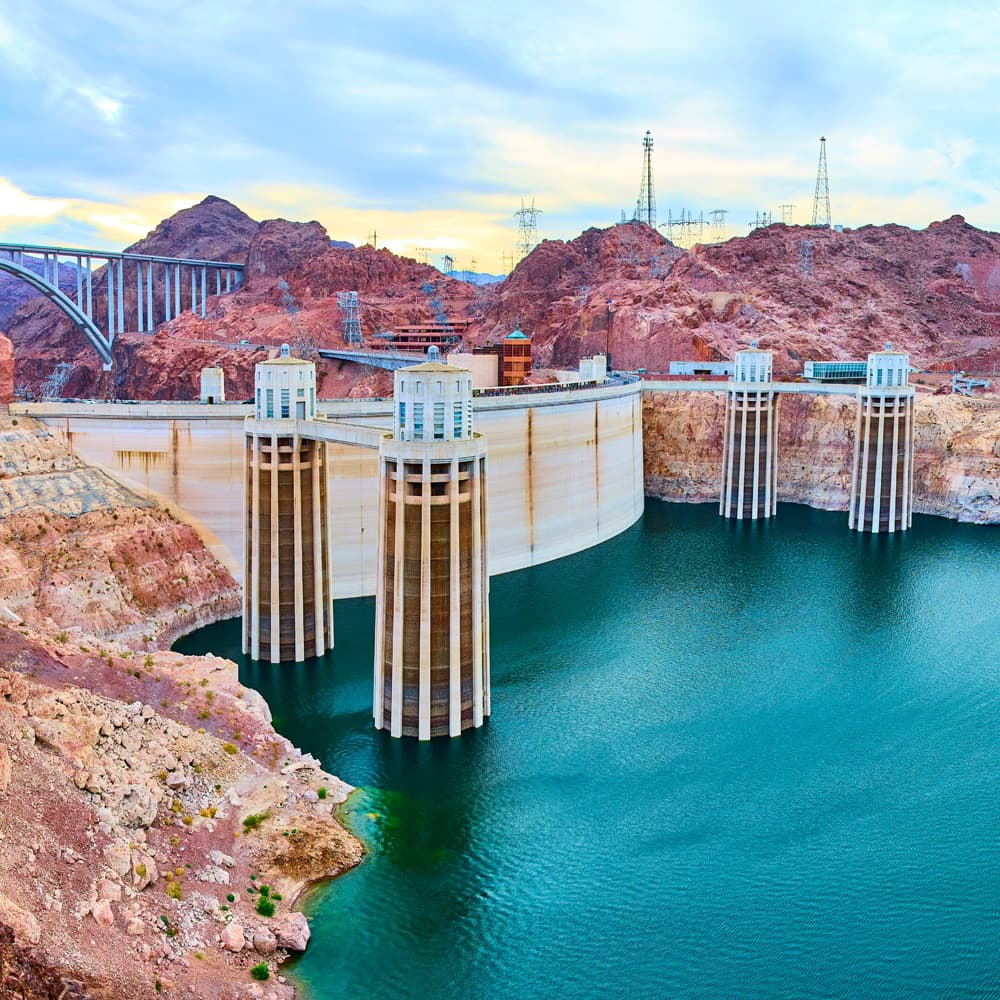
Arizona, California, and Nevada – the Lower Colorado River Basin States – have stepped up to buy time for the Colorado River, which is in crisis and further aggravated by the driest and warmest winter on record. Last Friday, those three states submitted a proposal to the U.S. Bureau of Reclamation to take less water from the river over the next two years to protect Lake Mead (the main reservoir for Lower Basin users). So, what does this proposal mean for Arizona, the ten AMWUA cities, Tucson, and others who rely on Colorado River water?
First and foremost, the plan is only a small step forward, not the long-term remedy needed to protect a river critical to the national economy, which is producing less water due to worsening hydrology. Conditions on the river have declined to the point we could soon see dead pool at Lake Powell or Lake Mead, where water levels fall below the point where Hoover or Glen Canyon Dam can pass water through their outlets or the powerplant intakes, meaning downstream releases effectively cease. If this happens, downstream users – including the Central Arizona Project (CAP), which delivers water to the AMWUA cities – will go dry.
While this risk remains, the Lower Basin Plan is a significant step forward, in which Arizona, California, and Nevada have offered to collectively take a substantial 1.25 million acre-feet cut in 2027 and again in 2028. For its part, Arizona will be cut by 760,000 acre-feet annually, which equates to a 20% cut to the Colorado River water that the AMWUA cities and other municipal providers receive from the CAP. The three states also agree to conserve an additional 700,000 acre-feet over the two years (300,000 acre-feet total from Arizona) to prop up Lake Mead levels, which would be used if deeper cuts are necessary. Under this proposal, the federal government would create a Tribal pool of 280,000 acre-feet to meet trust commitments to Indian Tribes in Arizona.
Arizona, California, and Nevada deserve credit for once again taking the lead to protect Lake Mead and the Basin as a whole. Each of those states has offered to sacrifice additional water through measurable, verifiable actions. By contrast, the Upper Basin States – Colorado, New Mexico, Utah, and Wyoming – have only suggested using a mediator to resolve their contentious differences with the Lower Basin – an idea raised last week after learning about the Lower Basin States proposal. Unfortunately, the federal government has enabled the Upper Basin’s lack of accountability and has not proactively led the Basin States in creating a long-term, balanced solution to pull the Colorado River out of crisis.
Having the Lower Basin States reach consensus on this short-term deal may lower the probability of litigation. It shows that Arizona, California, and Nevada can continue to collaborate, just as they did two years ago, when they drafted a proposal to manage the river after 2026. It could also create space for all seven Basin States and the federal government to move beyond their intransigent negotiations and develop a longer-term approach to reducing use across all states. But it is difficult to see how continuing the same negotiations as in the last three years, again and again, is expected to produce different results. We’ve been here before, when an exceptional winter snowpack in 2023 and subsequent runoff pulled the Colorado River back from the brink of disaster and gave the seven Basin States a reprieve to find consensus for how to manage the river after the current operating guidelines expire in 2026. Three years later, there are no new long-term guidelines for managing the river, and it is in a worse state than it was in 2023.
For the AMWUA cities and other Arizona municipal providers, the Lower Basin proposal means they will have at least 20% less Colorado River water for the next two years. That is a sizeable reduction, but at least it is smaller than the cuts Reclamation proposed for Arizona in its January draft Environmental Impact Statement (EIS). The Lower Basin Plan gives those municipal water providers a little more time to prepare for having larger reductions to their Colorado River water.
Ultimately, Mother Nature, not the negotiations, will decide how much water the Colorado River delivers. The declining trajectory of the river’s hydrology is making the river no longer a dependable water supply. Even if the federal government and the Basin States eventually take bold measures to safeguard the Colorado River system, Arizona and the ten AMWUA cities must still take action to show we can adapt to relying on less Colorado River water.
It will be critical for the ten AMWUA cities and other municipal providers that receive Colorado River water to take full advantage of the two years provided by the Lower Basin States plan. They must create their own plan for managing greater reductions in Colorado River water, primarily by developing and investing in existing and new water supplies. These investments will not be cheap, but financing water security always strengthens the long-term foundation necessary for resilient and thriving communities.
Adjusting to significantly less Colorado River water means Arizona will need to take bold steps to support municipal water providers’ proactive efforts to ensure they continue meeting their customers' needs. This will include state funding for new supplies since municipal water providers cannot always rely solely on their own resources to develop and finance new water supplies and infrastructure, and conservation will only get us so far with water cuts of this magnitude.
Using a basketball analogy, the Lower Basin Plan is like a three-point shot right before half-time that ties the game after being behind the entire first half. It’s not a moment to become overconfident, let your guard down, or relax on the sideline. Over the next two years, the Lower Basin Plan offers the time in the locker room to develop the game plan and demonstrate that Arizona and its municipal water providers are willing to go the distance, with or without the Colorado River, to secure water certainty so our state can continue to thrive.
For 57 years, the Arizona Municipal Water Users Association has worked to protect our member cities' ability to provide assured, safe, and sustainable water supplies to their communities – Avondale, Chandler, Gilbert, Glendale, Goodyear, Mesa, Peoria, Phoenix, Scottsdale, and Tempe. For more information on water, visit www.amwua.org.