
AMWUA Blog
BY: AMWUA StaffDoes Grass Belong in the Desert? What You Need to Know Before Overseeding.
Homeowners, HOAs, and businesses throughout the valley are replacing grass with more sustainable options that save both water and money. Many are also choosing not to overseed in the winter, which has its own advantages.
Here are some key facts to help you decide whether to overseed, remove your grass, or consider artificial turf. Knowing all your options will help you choose what’s best for your yard and our water supply.
Benefits of Skipping Overseeding This Winter
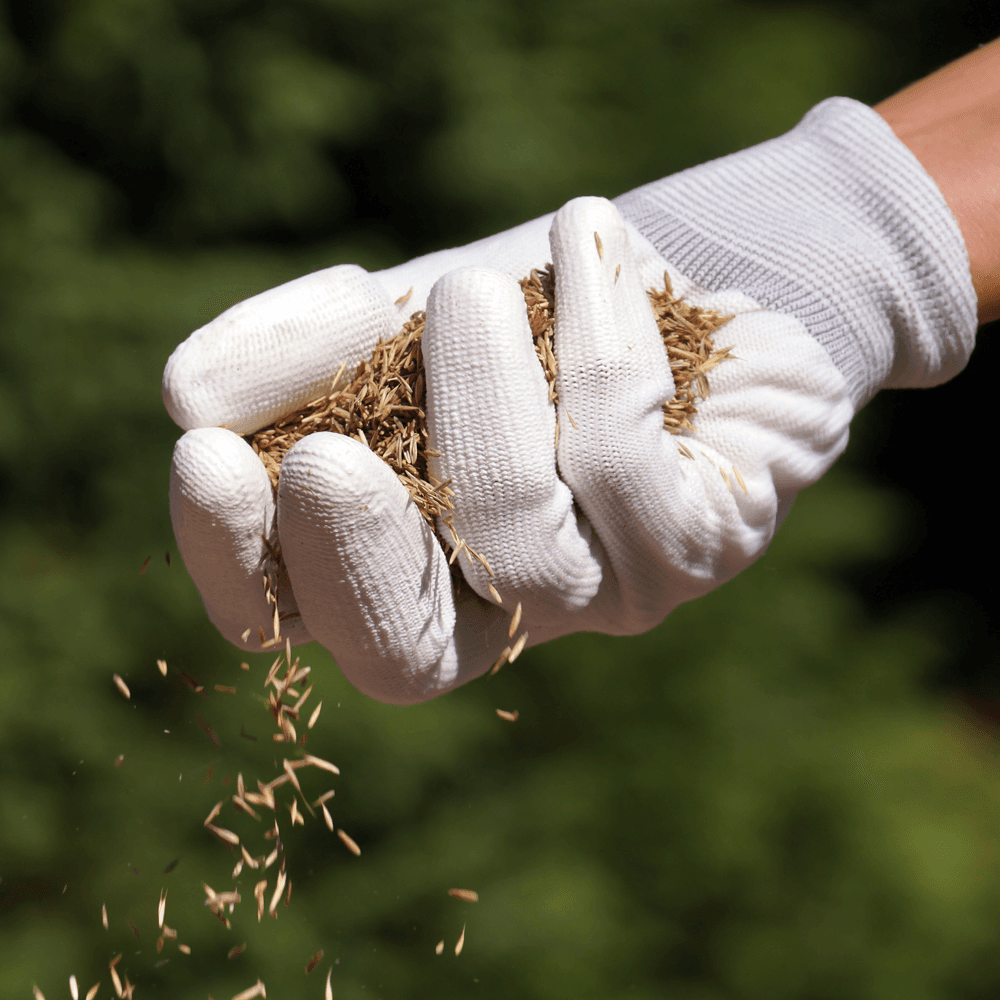
In the fall, many people think about overseeding their Bermuda grass with ryegrass for a green winter lawn. But skipping overseeding has several benefits:
- Save water: Overseeding uses around 8,000 gallons of water for every 1,000 square feet of lawn each winter, while a dormant lawn only needs about 500 gallons.
- Save money: If you skip overseeding, you won’t need to buy grass seed, fertilizer, or pay for extra upkeep.
- Protect your Bermuda grass: Giving your lawn a break in winter helps its roots grow stronger and makes it healthier in spring. Overseeding adds competition between ryegrass and Bermuda, which can stress your summer grass as the seasons change.
By not overseeding, you save water, time, and money, and your yard will be healthier, too. When Bermuda grass goes dormant in cooler weather, it naturally turns brown but is not dead. It will green up again when temperatures rise in the spring. If you live in an HOA community, check its landscaping requirements, as dormant Bermuda is a healthy, seasonal lawn, not a neglected one.
Skipping overseeding can also be a good opportunity to take a closer look at your lawn. Keeping grass only where it serves a purpose and replacing unused areas with desert-adapted landscaping can provide even greater long-term water and maintenance savings.
Choosing Where Grass Works Best
Consider how you use your grass and whether you need it all. Grass can be worth keeping where it provides space for play, recreation, or pets. These areas are often easier to use and water efficiently when they are appropriately sized and simply shaped. There’s no exact recommended amount, but most people find that about 1,000 square feet of functional grass is enough for their needs.
Grass that is rarely used, primarily decorative, or difficult to water without runoff or overspray may be a good candidate for removal. Replacing these areas with desert-adapted plants can save water, reduce maintenance, and create an attractive landscape suited to our desert environment.
Reasons To Remove Your Grass
Taking out your grass might feel overwhelming, but switching to desert landscaping (xeriscape) can cut your outdoor water use by half or more. Here’s how they compare:
- Bermuda or hybrid Bermuda with winter overseed: 55+ inches of water per year
- Bermuda without overseed: 40+ inches of water per year
- Xeriscape: less than 18 inches per year
Since we only get about 8 inches of rain each year, you can see how much water you could save.
Before you begin, make a landscape plan that works for your needs and budget. Many AMWUA cities have resources, classes, and rebates to help you make the change. Check your city’s conservation page or visit our grass webpage for more information.
Artificial Grass: Questions to Ask First
Artificial turf might look like a simple way to save water, but it has some downsides. Research from Arizona State University (ASU) shows that synthetic grass can get even hotter than asphalt—sometimes over 150°F—which makes it unsafe for kids and pets during the day.
If you still want to put in a small patch of artificial turf, keep these other factors in mind:
- Safety: Infill materials may pose chemical risks.
- Maintenance: You’ll need to brush, rinse, and clear debris from turf. It can also hold onto odors and mold.
- Durability: Heat, furniture, and even fireworks can damage turf. Over time, the sun breaks down the plastic, and replacing it can be expensive.
- Environmental impact: Turf stops water from soaking into the ground, hurts soil health, and makes the area hotter, which can stress nearby plants and trees.
Artificial turf might be okay for small spots, but it needs upkeep and doesn’t last forever. Think about these points before you decide to buy it.
Using less water at home helps us make the most of our water supply. Since most water use occurs in our yards, adjusting how we care for grass or replacing it with desert-friendly plants that require less water and maintenance can save significant amounts. Many AMWUA cities offer rebates and incentives to help you make this change.
For 57 years, the Arizona Municipal Water Users Association has worked to protect our member cities' ability to provide assured, safe, and sustainable water supplies to their communities — Avondale, Chandler, Gilbert, Glendale, Goodyear, Mesa, Peoria, Phoenix, Scottsdale, and Tempe. For more information, visit amwua.org.