
AMWUA Blog
BY: Warren TenneyFederal report confirms dire state of the Colorado River after dismal winter
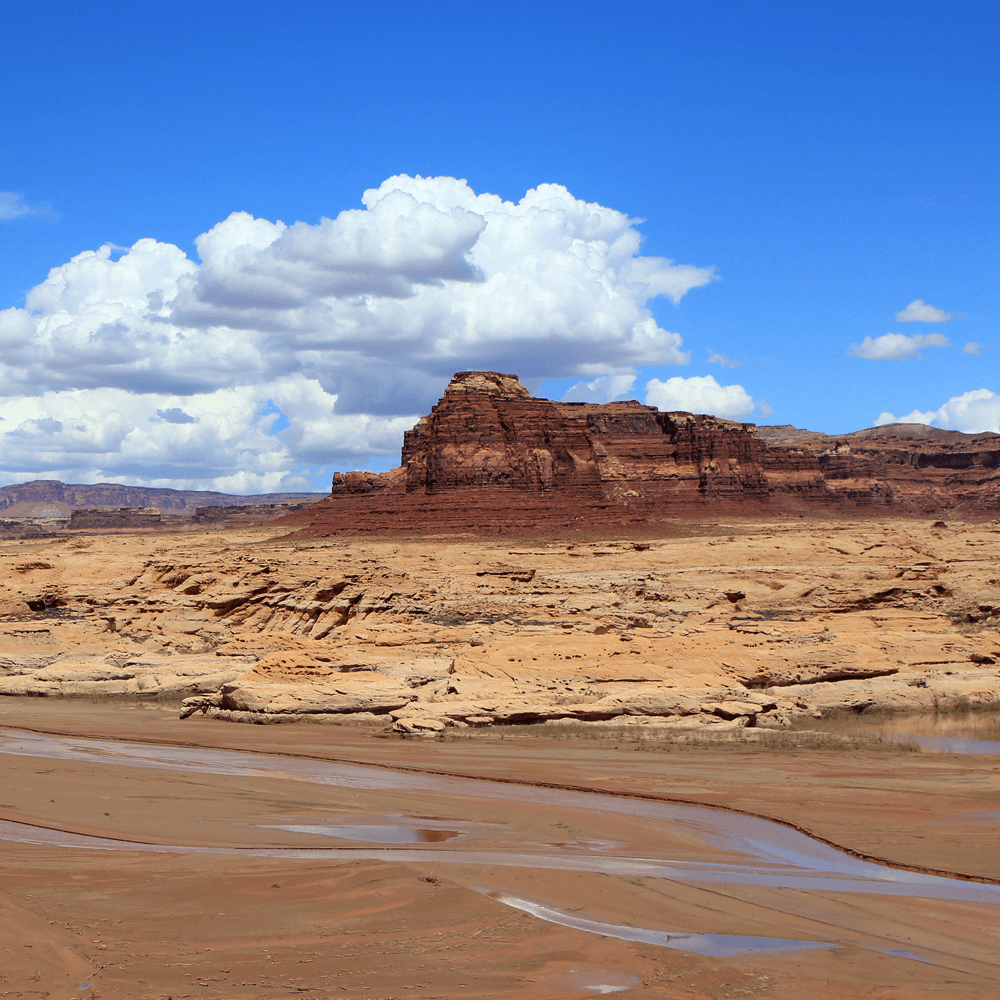
The Colorado River is in crisis. Mother Nature is not waiting for inter-state negotiations or federal action to clearly prove that the Colorado River is no longer the dependable water supply that we have relied on. So how is the federal government going to address this unprecedented situation, and what does it mean for Arizona and the ten AMWUA cities?
The U.S. Bureau of Reclamation’s April 24-month study reaffirmed that the Colorado River is producing less water, a trend aggravated by this winter’s snowpack in Colorado and Utah, which was the worst on record.
Reclamation is now forecasting that Lake Powell’s inflow for this year, the amount of water generated by this year’s precipitation in the Rocky Mountains, will only be 2.78 million acre-feet or 29% of the historical average. For perspective, the average annual inflow over the last 30 years has been 12.4 million acre-feet.
This dismal winter has intensified the stress on an already strained Colorado River system. The total storage in Lake Mead, Lake Powell, and other Colorado River reservoirs is at a low of 36% of capacity. Reclamation is now projecting that by the end of August, Lake Powell’s water levels may fall below 3,490 feet – the minimum level for hydropower generation at Glen Canyon Dam. This would create instability in the region’s power and water supplies.
In response to these alarming conditions, Reclamation, the federal agency responsible for operating the dams in the Colorado River system, has decided to move up to 1 million acre-feet of water from the upstream Flaming Gorge Reservoir over the next several months and to also reduce Lake Powell’s annual downstream release to only 6 million acre-feet rather than the required 7.48 million acre-feet. These actions are intended to stabilize Lake Powell, but will also increase pressure on Lake Mead, which is only just a third full.
These actions are unlikely to protect a river system essential for agriculture, national defense, semiconductor manufacturing, tribal interests, and the economy. Unless Reclamation and the seven Basin States take more aggressive steps to reduce demand across all users, the river could reach dead pool at Lake Mead or Lake Powell within a year or two, meaning that only the water flowing into those reservoirs can be released through Hoover or Glen Canyon Dam. This scenario is the result of the federal government and Basin States failing over the past two years to agree on new management guidelines for the Colorado River system, which will expire in 2026.
Reclamation has signaled that it will soon announce how the Colorado River will be operated next year. No one is anticipating that the decision will be the bold surgical plan necessary to keep the Colorado River off life support during the next 20 years, but rather a two- or three-year band-aid. Taking temporary, makeshift measures was indicated in January, when Reclamation stated that without consensus from the Basin States, it would pursue reductions only in the Lower Basin (Arizona, California, and Nevada) and not require cuts in the Upper Basin (Colorado, New Mexico, Utah, and Wyoming). Plus, the bulk of those Lower Basin reductions would be placed on the Central Arizona Project (CAP). Arizona has strongly contended that no single state or group of users should bear a disproportionate burden of protecting a river that is critical to the national economy and to 40 million Americans across seven states.
Unfortunately, the difficult reality is that Mother Nature will be the final arbiter of how much water the Colorado River produces and delivers, and the actual hydrology continues to be worse than what has been forecasted. Whether the federal government takes bold measures to protect the overall health of the Colorado River system or enacts a short-term plan that does not primarily target CAP users, Arizona, and the ten AMWUA cities must still show that we can adapt to relying on less Colorado River water.
For some time now, the ten AMWUA cities have understood that they would face significant reductions in their Colorado River water after this year. While they don’t know how much they will have, the AMWUA cities are already acting to offset reduced water from a major supply. These actions include investing in the expansion of Bartlett Dam on the Verde River and in Advanced Water Purification (AWP) technology to recycle water and create an additional water source. These and other initiatives will not be cheap, but large investments for water certainty always strengthen the long-term foundation necessary for resilient and thriving communities. Water security is the foundation for these desert communities and has always been.
Adjusting to significantly less Colorado River water means Arizona will also need to take bold steps to support municipal water providers’ proactive efforts to ensure they continue meeting their customers' water needs. This will include state funding for new supplies since municipal water providers cannot rely solely on their own resources to develop and finance new water supplies and infrastructure. It also most likely involves short-term regulatory flexibility to ensure no interruptions in water deliveries.
Regardless of what the federal government decides, Arizona will face a major long-term reduction in its Colorado River water supply starting in 2027. Arizona and the AMWUA cities can confidently face this challenge by employing what has made us successful to date. That formula is innovative planning, wise management, and investment in water resources and infrastructure to ensure water always flows at our taps.
For 57 years, the Arizona Municipal Water Users Association has worked to protect our member cities' ability to provide assured, safe, and sustainable water supplies to their communities – Avondale, Chandler, Gilbert, Glendale, Goodyear, Mesa, Peoria, Phoenix, Scottsdale, and Tempe. For more information on water, visit www.amwua.org.