
AMWUA Blog
BY: AMWUA StaffHow Water Security Enables Arizona to Thrive in the Desert: Celebrating 114 Years of Resilience
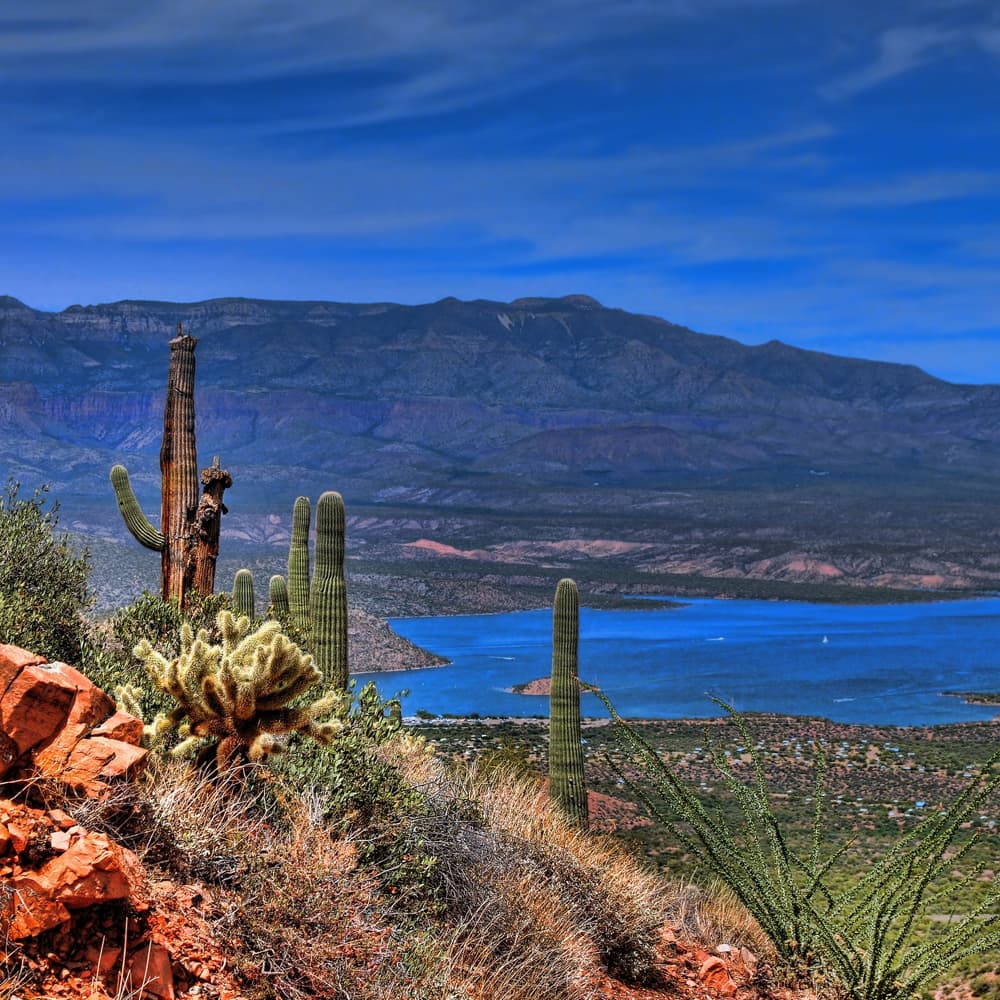
This month, Arizona celebrates its 114th birthday. It’s a great time to appreciate our diverse landscapes and the resilience it takes to thrive in one of America’s most challenging and rewarding places. It’s also a time renew our commitment to planning and investing in the foundation that helps us prosper – water security.
Arizona is known for its deserts and dry weather, but its geography is more diverse than many people think. Much of the state is over 4,000 feet above sea level and includes the world’s largest Ponderosa Pine forest. About one-tenth of Arizona is forest, one-fourth is woodland, another quarter is grassland, and the rest is desert. Arizona is also the only state that covers all four North American deserts: the Sonoran, Mojave, Great Basin, and Chihuahuan.
This variety of landscapes brings unique challenges for water management. Each region has its own rainfall patterns, water needs, and ways to conserve—from the high mountain snow that fills our rivers to desert cities that rely on diverse water supplies.
All these features show Arizona's diversity, and highlight the challenges of living here. The climate and geography can cause temperature swings of 30 to 40 degrees between day and night. Rainfall also changes a lot across the state, with desert areas like the Valley getting just 5 to 8 inches each year, which is less than one-tenth of what Seattle receives. This winter has been especially dry, remaining at the low end of that range and underscoring the importance of long-term water planning.
While other places are just beginning to discuss sustainability, Arizona has long been planning for it. For more than 40 years, the state has set high standards in the Phoenix area through the 100-year Assured Water Supply Program, which is one of the nation’s most forward-thinking water policies. The ten AMWUA cities have planned and invested billions in water resources and infrastructure to provide water certainty for over 3.7 million residents, half of the state’s population. Because of this water security, the Phoenix area has built a strong, diverse economy. Maricopa County generated $419 billion in GDP in 2025, accounting for 73% of Arizona’s total. All of which cascades to benefit all of Arizona and the nation.
As we celebrate our 114th year of statehood, we are facing significant challenges to our most precious resource – water. By the end of this year, we will see significant reductions in the Colorado River water that the Central Arizona Project (CAP) delivers to Central and Southern Arizona. This is because the federal government must adopt new guidelines to distribute reductions to the Colorado River, which is producing less water. While we don’t know the exact amount, Reclamation is proposing cutting CAP’s deliveries from 32% to 100%, which would undermine Arizona’s water certainty and the national economy.
The solution to these challenges is exactly what has enabled us to thrive in our diverse state: planning, managing, and investing in water resources and infrastructure. That is what the AMWUA cities are striving to do, even without knowing how much their Colorado River water will be cut after this year. It does mean water will cost more, but investing in our water security has always delivered significant returns for a resilient and vibrant Arizona. It also means investing in conservation, supporting innovative water policies, and fostering responsible growth, all of which can ensure Arizona remains thriving, diverse, and successful for the next 114 years and beyond.
For 57 years, the Arizona Municipal Water Users Association has helped protect our member cities' ability to provide their communities with assured, safe, and sustainable water supplies. For more information, visit www.amwua.org.