
AMWUA Blog
BY: AMWUA StaffInvesting in Infrastructure Secures our Water Future
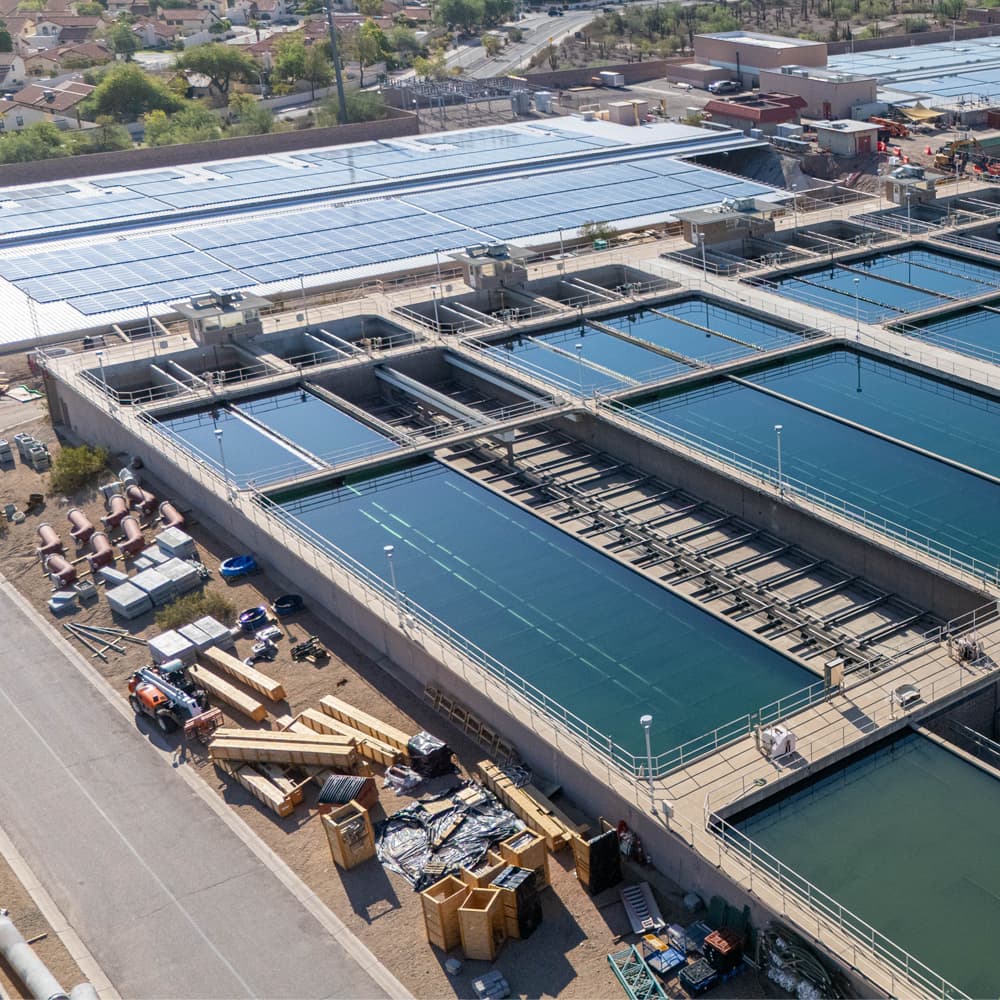
Water systems are the backbone of our communities, providing the essential infrastructure that delivers safe, clean water to households, industries, and businesses. Each day, millions of gallons flow through a complex network of underground pipes to meet our needs. Water begins its journey at treatment plants, moves through storage tanks and pumping stations, and travels along service lines until it reaches our water meters. This intricate system ensures water is always available when we need it and reflects decades of investment in extensive infrastructure.
The importance of clean, safe water cannot be overstated—it's a critical resource for every community. To ensure a sustainable water future, we must continue investing in essential infrastructure, such as pipelines, wells, treatment facilities, groundwater recharge projects, and technological enhancements. These investments are especially crucial as we face ongoing challenges, including a persistent 30-year drought that is reducing precipitation and diminishing supplies from the Colorado River, resulting in less water being delivered to Central Arizona.
Like other essential services—transportation, telecommunications, and electricity—water infrastructure ages and requires periodic replacement and upgrades. This underscores the importance of proactive maintenance. For the AMWUA cities and all water service providers, continually enhancing infrastructure remains a top priority. Achieving this requires a steadfast financial commitment—not only to maintain the existing infrastructure network but also to invest in replacements, upgrades, and necessary expansion.
Maintaining aging, extensive water distribution and collection systems is an ongoing and growing expense for cities, directly influencing customer water rates. Municipal water providers continually refine strategies for planning and financing the timely replacement of critical infrastructure. Their proactive approach reduces costly emergency repairs and minimizes service disruptions, ensuring reliable, uninterrupted delivery of this precious resource.
This month, as we recognize Infrastructure Week, we join the national advocacy and education effort that brings together business, labor, and elected leaders to spotlight infrastructure investment. In the desert, understanding and appreciating the importance of infrastructure is especially critical. We encourage everyone to support prioritizing investments to rehabilitate or replace aging water and wastewater systems—and to build new ones—to ensure water reliability and resilience now and for future generations.
Learn more about the water infrastructure within your city:
AVONDALE – The City of Avondale now stretches 41 square miles and is home to over 90,000 residents. The city maintains 385 miles of water lines, 243 miles of sanitary sewer lines, 2,903 fire hydrants, 27,386 water meters and operates three water treatment plants, 16 groundwater wells, 11 lift stations, and one water reclamation facility.
CHANDLER - More than 280,000 people reside in the City of Chandler. The city supplies an average of 58 million gallons of drinking water each day to customers across 64 square miles through two water treatment plants and 1,230 miles of potable water lines. The city maintains 15,096 fire hydrants, nearly 84,000 meters, 1.015 miles of wastewater lines and operates three wastewater treatment plants. Chandler also delivers more than 9.4 billion gallons of recycled water for irrigation, groundwater recharge, and wildlife habitat through 94 miles of reclaimed water lines.
GILBERT – The Town of Gilbert is home to nearly 276,000 residents across 72 square miles. The town’s infrastructure includes two water treatment plants, two wastewater treatment plants, 1,473 miles of water lines, 912 miles of sanitary sewer pipeline, 91,349 water meters, 42,162 system valves, and 14,456 fire hydrants. In addition, 74 miles of reclaimed water pipes deliver water to 71 customers for irrigation of parks and common areas, offsetting drinking water use. The remaining reclaimed water is used to replenish underground water supplies.
GLENDALE – The City of Glendale has been providing water to its residents for more than a century. It is now the state’s fifth-largest city, spanning nearly 56 square miles with a population of about 250,000. It maintains and operates four water treatment plants, two wastewater treatment plants, 1,040 miles of water lines, 703 miles of wastewater lines, 8,400 fire hydrants, and 62,600 water meters. Glendale was the first city in the country to adopt an ordinance requiring water-efficient fixtures.
GOODYEAR—The City of Goodyear is expanding into 191 square miles on the west side of the Valley. Serving a population of 63,000 residents in the city’s water service area, Goodyear's infrastructure is currently comprised of four water treatment plants, three wastewater treatment plants, 359 miles of water lines, 254 miles of wastewater lines, 3,721 fire hydrants, and 23,334 water meters.
MESA - Serving over half a million people each day, the City of Mesa has been committed to providing safe, reliable, and responsible water and wastewater services for over 100 years. Mesa’s robust infrastructure includes three water treatment plants and four water reclamation plants. As the state’s third-largest city, Mesa builds and maintains one of the largest water and wastewater distribution and collection systems in Arizona, with 2,586 miles of water lines, 1,826 miles of wastewater lines, 20,248 fire hydrants, and 162,764 total water connections across 138 square miles.
PEORIA – The City of Peoria was incorporated in 1954 and initiated water service that same year. Today, the city stretches across 178 square miles, reaching north of Lake Pleasant, and serves 190,000 residents. The city’s infrastructure comprises two water treatment plants, with a 44% ownership in a third plant, three wastewater treatment plants, 1,043 miles of water lines, 764 miles of wastewater lines, 27,815 water valves, 10,182 fire hydrants, and 62,810 water meters.
PHOENIX – As one of the largest utilities in the country, Phoenix Water delivers water to over 1.6 million residents and handles wastewater treatment operations for 2.5 million residents in five cities. Phoenix’s vast infrastructure includes 7,000 miles of water lines, 5,000 miles of sewer lines, eight treatment plants, dozens of pump stations, reservoirs and wells, 50,000 fire hydrants, and more than 420,000 water meters over a 540 square-mile service area.
SCOTTSDALE – With a population of almost 250,000, Scottsdale Water delivers an average of 61 million gallons of water daily to more than 91,000 customers through more than 2,085 miles of pipes and maintains more than 10,979 fire hydrants. Its wastewater system comprises 1,341 miles of lines and more than 40 lift stations. It is the first Arizona water utility to implement indirect potable reuse.
TEMPE – Serving 192,687 residents within 40 square miles, growing by an additional 80,000 when Arizona State University is in session, the City of Tempe’s infrastructure includes two surface water treatment plants and a water reclamation facility. Tempe also maintains more than 860 miles of water lines, 500 miles of wastewater lines, 200 miles of stormwater mains, 9,400 fire hydrants and 44,000 meters.
For 57 years, the Arizona Municipal Water Users Association has worked to protect our member cities' ability to provide assured, safe, and sustainable water supplies to their communities – Avondale, Chandler, Gilbert, Glendale, Goodyear, Mesa, Peoria, Phoenix, Scottsdale, and Tempe. For more information on water, visit www.amwua.org.