
AMWUA Blog
BY: Warren TenneyLumps of Coal for Colorado River Basin States and US Bureau of Reclamation
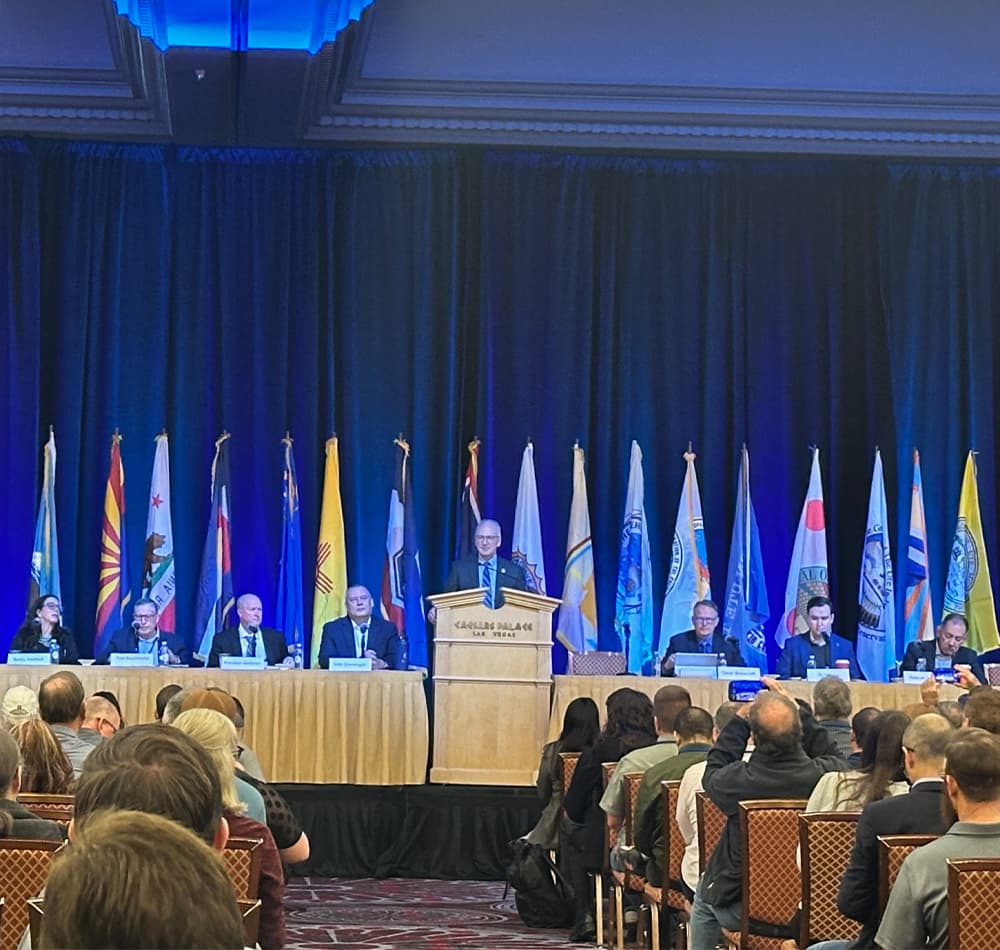
When over 1,700 people attend a crucial water conference in Las Vegas just before Christmas, one would expect them to take away a little more peace on earth and goodwill toward men rather than the proverbial lump of coal. Yet, that was not the case for this year’s Colorado River Water Users Association (CRWUA) conference. Instead, attendees, including the AMWUA cities, departed frustrated, disappointed, and with uncertainty about their future.
In just one year, the current rules governing how Colorado River basin states share shortages of the river’s water will expire. Water users from the Colorado River states returned home from the conference without knowing how they will share reductions or without an understanding of how the federal government plans to protect the Colorado River system and infrastructure for 43 million people, critical agricultural regions, and ecological habitats. Municipal water providers, farmers growing winter vegetables for the nation, and tribal communities with water rights settlements, do not know how much Colorado River water they will receive after 2026. This uncertainty is unacceptable for a region that contributes $4 trillion to the national economy.
Attendees at the conference were already well aware that the Colorado River is in a dire situation. Scientists, scholars, and the US Bureau of Reclamation have shown that a 25-year megadrought, along with warming and drying in the Colorado River Basin, has significantly reduced the amount of water the river produces. If this winter’s snowpack and runoff are as bad as last year’s, Lakes Powell and Mead may not be able to release water without risking the structural integrity of Glen Canyon or Hoover Dams, which could also seriously reduce the generation of hydropower. This scenario could occur despite mandatory cuts placed on the Lower Basin States (Arizona, California, and Nevada) and those same states voluntarily keeping water in Lake Mead. All of which will bring serious economic, political, and environmental challenges for the entire basin.
One central theme throughout the conference was that Mother Nature is in control. This is forcing the federal government and the seven Basin States to reckon with a river that has historically been over-allocated and is now declining in the amount of water it produces. Although 16.5 million acre-feet of the river’s waters are legally allocated to its users, the river has only produced an average of 12.4 million acre-feet annually since 2000. The only way for the river to continue benefiting every state and user is for each basin state and user to accept reductions in the amount of water they receive.
More frustrating than the dismal hydrology is that Colorado River water users did not hear any consensus from the seven Basin States’ lead negotiators on how the river should be managed after 2026, despite 2.5 years of negotiations; there was no sign of the collaboration needed to protect the river and end the stalemate.
And more discouraging than this stalemate is that even though the federal government chastised the seven Basin States negotiators for grandstanding and rhetoric that was running down the clock; no federal official provided any real threat or incentive for what would happen if the states didn’t reach an agreement. The US Bureau of Reclamation owns and manages the infrastructure of the Colorado River system that benefits every user of the river, so they should impose credible consequences for failed negotiations to spur agreement and provide some certainty about what water users can expect if negotiators continue to stumble.
As wise parents recognize, cooperation in the family requires each member to know that they have a responsibility to one another and that failure to meet deadlines has real consequences. The Basin States failed to meet a November 11th deadline with no repercussions, and have now been told to meet a February 14th deadline with no threat of risk. The Lower Basin States have put forward bold proposals, including how those three states and Mexico would reduce their water use by 1.5 million acre-feet annually. Yet, if the Colorado River’s hydrology worsens, all states will need to be part of the solution. The Upper Basin States (Colorado, New Mexico, Utah, and Wyoming) have yet to step up and put forward a viable proposal that recognizes the reality of the Colorado River today. Reclamation has yet to describe or analyze a scenario that would have negative consequences not only for the Lower Basin but also for the Upper Basin. Each family member needs to know that they face real risks if cooperation is not achieved.
Every single user in the basin knows we are standing at the edge of a cliff with disaster looming below. To avoid falling over, leadership from the federal government and the Basin States is crucial. Colorado River users deserve certainty about how much water they can expect in a year from now, and financial support from the federal government to help reduce the risks that communities, agriculture, and tribes face when they receive less water.
The Colorado River crisis is a challenge for the entire basin family to rapidly reassess and accept the river we have today and be part of the solution. Immediate action is needed, or we will ring in 2026 with real anxiety and despair about our shared water future. For a hopeful and secure 2027 and beyond, we need a fair, sustainable agreement where all seven states are required to live with a smaller river to secure its future—and ours.
For 56 years, the Arizona Municipal Water Users Association has worked to protect our member cities’ ability to provide assured, safe, and sustainable water supplies to their communities. For more water information, visit www.amwua.org.