
AMWUA Blog
BY: AMWUA StaffUnexamined Risks: How the New Colorado River Study and Options Fall Short
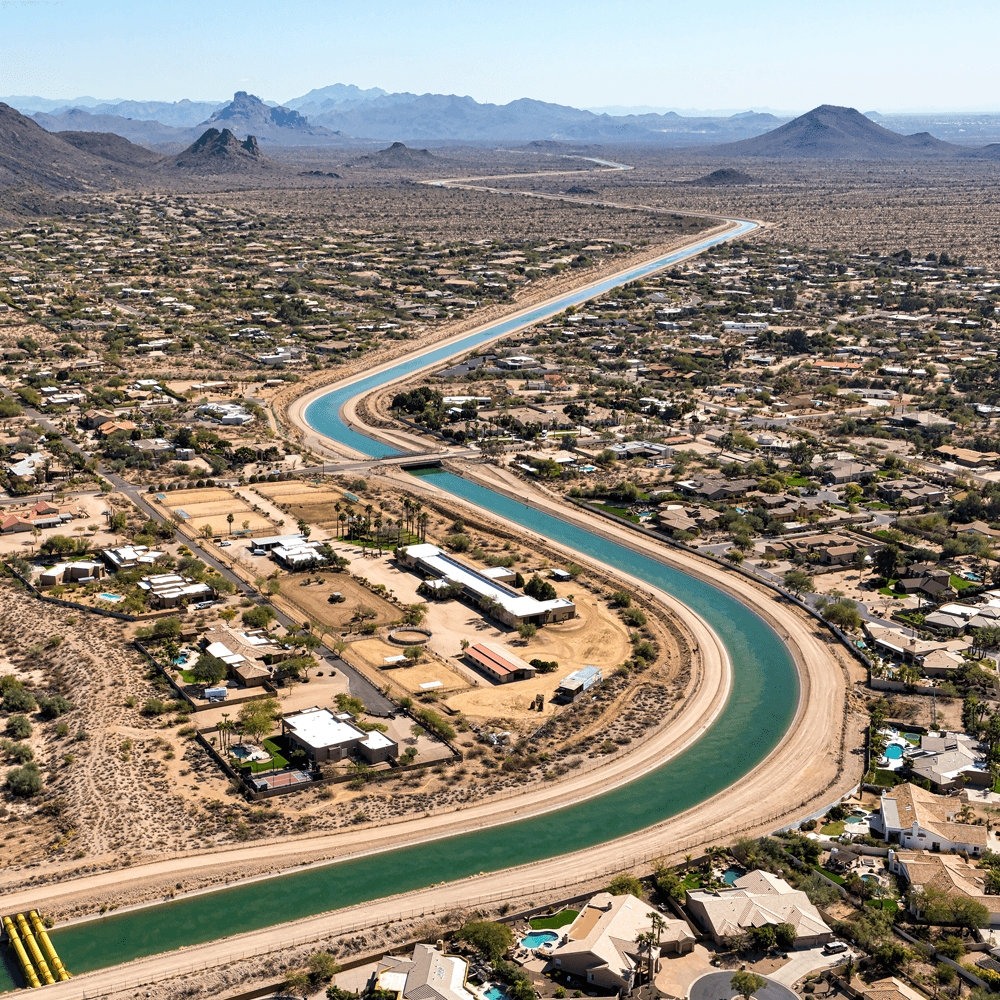
The U.S. Bureau of Reclamation recently released a 1,600-page Draft Environmental Impact Statement (DEIS)looking at options for managing the Colorado River after 2026. AMWUA and other Arizona water users worry that the DEIS does not do enough to protect the Colorado River system and puts too much of the reduction burden on Central Arizona.
The DEIS acknowledges that the river faces serious risks, but it does not discuss how these risks would affect the Phoenix area or the specific challenges that large city water providers face from proposed Colorado River cuts. To highlight these missing pieces, AMWUA and other stakeholders submitted their comments to Reclamation before this week’s deadline.
Below are some of the main points AMWUA cities shared with the Bureau:
The DEIS does not consider the state and national economic impacts on the AMWUA cities resulting from the proposed alternatives.
The DEIS failed to look at how its proposed options would affect cities that could lose water from the Central Arizona Project (CAP), which brings Colorado River water to Central Arizona. Losing this water could harm key industries in the Phoenix area, including defense, aerospace, and technology, which depend on reliable water deliveries. The DEIS also does not fully consider how water cuts could impact local businesses, communities, or tribal nations. By law, the DEIS must review these economic, social, and health impacts, but this analysis is missing.
Reclamation Unevenly Applies Its Authority Under the Law of the River.
Reclamation claims it cannot enforce water cuts in the Upper Basin, even though it owns and manages the dams above Lake Powell. However, the DEIS suggests that Reclamation can require water cuts in the Lower Basin, which includes Arizona. This uneven approach is unfair, legally questionable, and makes it harder for the Basin States to agree on a plan for sharing the river after this year.
The DEIS does not say whether it follows the Colorado River Compact’s delivery requirements.
The DEIS does not review whether its proposed options would break long-standing agreements about how much water must flow from the Upper Basin to the Lower Basin. These rules, set by the 1922 Colorado River Compact, require a certain amount of water to be delivered cumulatively over ten years. The DEIS does not say if its proposed options will meet this requirement or what would happen if they do not. Since all river management plans must follow the Compact, not addressing this issue is a serious oversight.
The DEIS does not consider reasonable alternatives suggested by the Lower Basin States.
The DEIS ignores a consensus-based plan proposed by the three Lower Basin states—Arizona, California, and Nevada—in March 2024. Federal rules require Reclamation to review reasonable alternatives, but this plan, even though those three states agreed to it, was not treated as a separate option. This is another oversight of the DEIS.
The DEIS does not analyze any alternatives that would protect Lake Powell.
The DEIS did not consider options to protect Lake Powell, which is a key reservoir for water supply, energy, and meeting legal requirements. Specifically, Glen Canyon has structural issues making it difficult for water to move through the dam and generate power when Lake Powell is at extremely low levels. Reclamation wants to keep Lake Powell above a certain water level but does not consider infrastructure improvements to better manage Glen Canyon Dam. These gaps mean the DEIS does not fully meet federal requirements for careful planning.
In summary, AMWUA supports a fair and inclusive agreement that involves all states, tribal nations, and Mexico to manage the Colorado River and necessary reductions after 2026. Reclamation should consider options beyond those currently in the DEIS, since the proposed alternatives do not adequately protect the ten AMWUA cities and other municipal providers. The DEIS does not address how water shortages would affect Central Arizona or include plans to prevent Lake Mead from reaching dangerously low levels.
The DEIS needs to require enforceable water cuts from the Upper Basin and fully review the social, environmental, and economic effects of shortages on Central Arizona and the country. Right now, it does not meet these responsibilities.
For 57 years, the Arizona Municipal Water Users Association has worked to protect our member cities' ability to provide assured, safe, and sustainable water supplies to their communities – Avondale, Chandler, Gilbert, Glendale, Goodyear, Mesa, Peoria, Phoenix, Scottsdale, and Tempe. For more information on water, visit www.amwua.org.