
AMWUA Blog
BY: AMWUA StaffWhat Impact Do Rainstorms Have on Arizona’s Water?
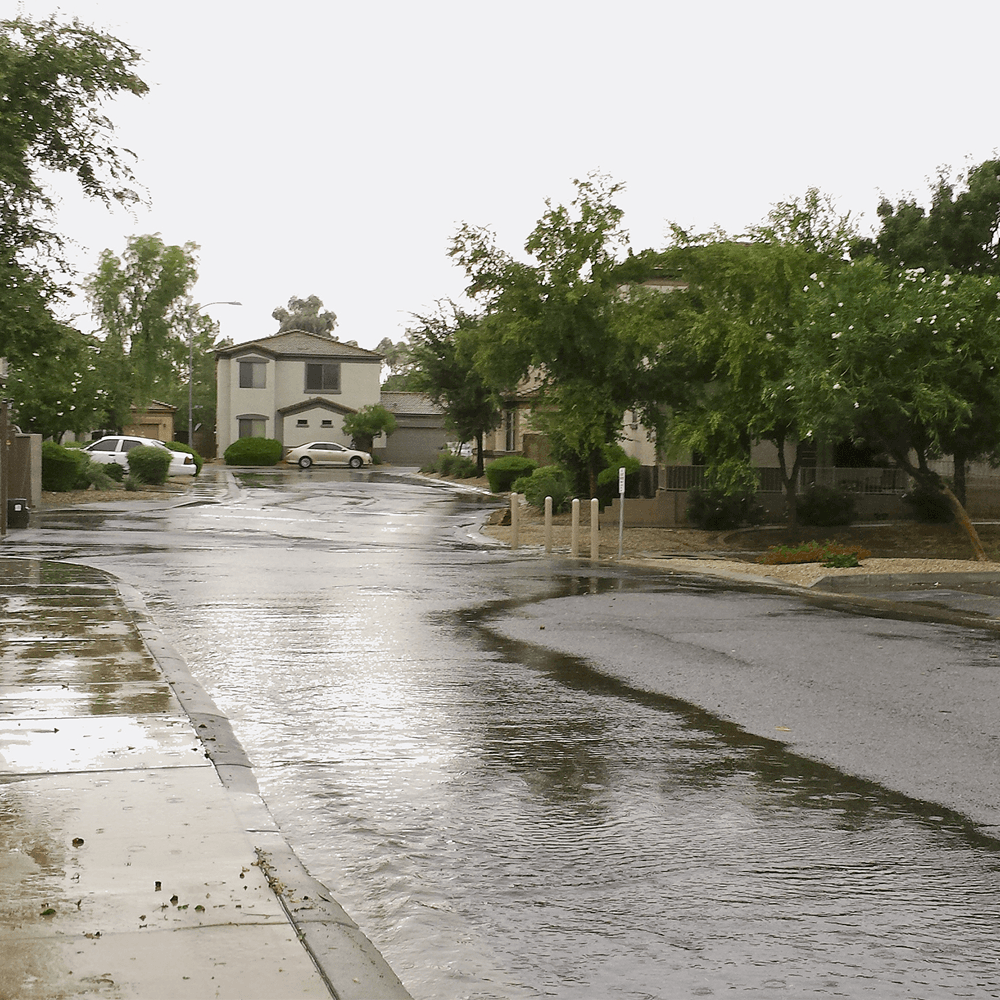
Fall is well underway in the Valley, and you’ve likely noticed the change: a sudden chill in the air and severe storms that have brought hail, damaging winds, and dangerous flash flooding across our state. The recent storms have been intense, downing trees, closing roads, and damaging property, with severe flooding in some areas. While many are still recovering from the damage and disruption, others welcome the rain after months of dry heat.
When you’ve lived in the desert and endured decades of drought, rain feels like a gift. It breathes new life into our air, landscapes, trees, and desert plants. At the same time, it’s important to recognize that not everyone experiences it as a blessing—especially those facing cleanup and loss. For many, though, these storms offer a chance to turn off irrigation systems, saving both water and money, and to appreciate the renewal rain brings.
But here’s the important part: these rainstorms won’t solve the Colorado River shortage or end our historic drought.
Why a few storms can’t fix the Colorado River
Arizona rainfall doesn’t replenish the Colorado River. Most of its water comes from snowpack high in the Rocky Mountains, hundreds of miles away. Unfortunately, local storms—even those with large volumes of rain—don’t affect how much water flows into Lake Powell and Lake Mead.
And both lakes are in trouble. This summer, Lake Powell and Lake Mead each dropped to the lowest levels ever recorded and now sit at only a quarter full. A weak snowpack and record heat in 2026 made things worse. Warmer temperatures cause snow to melt earlier, so less water reaches the river—a trend that is expected to continue. Dry soil also plays a role: even with significant snowfall, much of the runoff is absorbed into the ground and never reaches the river system. Rainfall can help by reducing dry soil, but its impact is limited.
While we welcome any snowfall in the Basin, a good winter will not change the trajectory of the Colorado River being less reliable. This winter will only determine if we have more serious reductions sooner rather than later.
What about our local rivers?
Part of the Valley’s water also comes from the Salt and Verde rivers, which are managed by the Salt River Project (SRP). These rivers are fed by rain and snow in Arizona’s own mountains, so local storms matter more here. Rain in the Valley reduces demand, while rain in the watershed can boost streamflow, as we are seeing this week.
According to SRP, the Salt and Verde River watersheds are on track for a record-breaking fall for precipitation and inflows, following three consecutive low-runoff seasons. October and November inflows in the Verde watershed will likely be the highest since 1972—about eight times the average.
About 85 percent of SRP’s surface supply also comes from winter runoff: a steady season of snow and rain over the high country. A wet October is a good start. This winter will decide the rest.
Our statewide drought works the same way—it’s measured in years and decades, not days. One wet week, or even a few, doesn’t erase a long-term deficit.
What if we get a wet winter like the predictions?
La Niña ended in spring 2026 after driving Arizona's driest-ever water year. Now, with a high probability of an El Niño, this winter could bring high levels of precipitation, potentially benefiting the Salt River reservoirs. As noted earlier, the Colorado River’s flow depends on snowpack. As temperatures rise, more precipitation falls as rain rather than snow, reducing runoff. El Niño can also steer storms toward Arizona, New Mexico, and southern Utah and Nevada, instead of the Upper Basin. Since the Upper Basin lies in a climatic transition zone, the jet stream doesn’t reliably reach it.
Planning for uncertainty
The AMWUA cities have prepared for this reality and understand our drought cycles and water challenges. They’ve invested in infrastructure and developed a diverse portfolio of water supplies, so they don’t depend on a single source to meet everyone’s needs. This diversity makes water more reliable for homes, businesses, and the economy.
Shortages are real, and planning helps us meet them. Cities are preparing for reduced Colorado River deliveries, and every resident can help reduce water waste, rain or shine. When the clouds clear, our water challenges will remain—and so will our commitment to addressing them.
For 57 years, the Arizona Municipal Water Users Association has worked to protect our member cities’ ability to provide assured, safe, and sustainable water supplies to their communities: Avondale, Chandler, Gilbert, Glendale, Goodyear, Mesa, Peoria, Phoenix, Scottsdale, and Tempe. For more information, visit amwua.org.