
Landscaping with Style
Learn About Landscaping Materials
Design
Consider incorporating hardscape or structures into your landscape plan to enhance the beauty and functionality of your yard, including:
- Patios and ramadas
- Walkways
- Boulders
- Barbecue or fire pit
- Built-in planters and seating areas
- Swimming pool or spa
- Walls or fences that are used to separate or screen an area
- Trellises that support vines and soften the look of fences and exterior walls
- Functional grass space, if necessary

A wide variety of landscaping materials is available in different colors. Consider options such as flagstone, bricks, exposed aggregate, and colored concrete, along with traditional hardscape materials like natural-colored concrete and pool decking. Furthermore, you can enhance the landscape by incorporating unique shapes or a mix of hardscape materials into your design.
Investigate your hardscape and structural options before planning your landscape. While visiting neighborhoods and public areas, observe how hardscape and structural features have been incorporated into landscape designs. You may also want to visit local landscape materials suppliers to see what’s available.
Mulches
Mulching is one of the most beneficial practices for your yard. By mulching, you effectively place a protective barrier around your plants, trees, and shrubs and over your bare soil. It will help suppress weeds, retain soil moisture better, and make plants more drought-resistant than bare ones. It also protects the soil against erosion and reduces compaction during heavy rains, giving your planted areas a finished look.
How to Select Mulch
There are two types of mulch—organic and inorganic—and each has pros and cons.
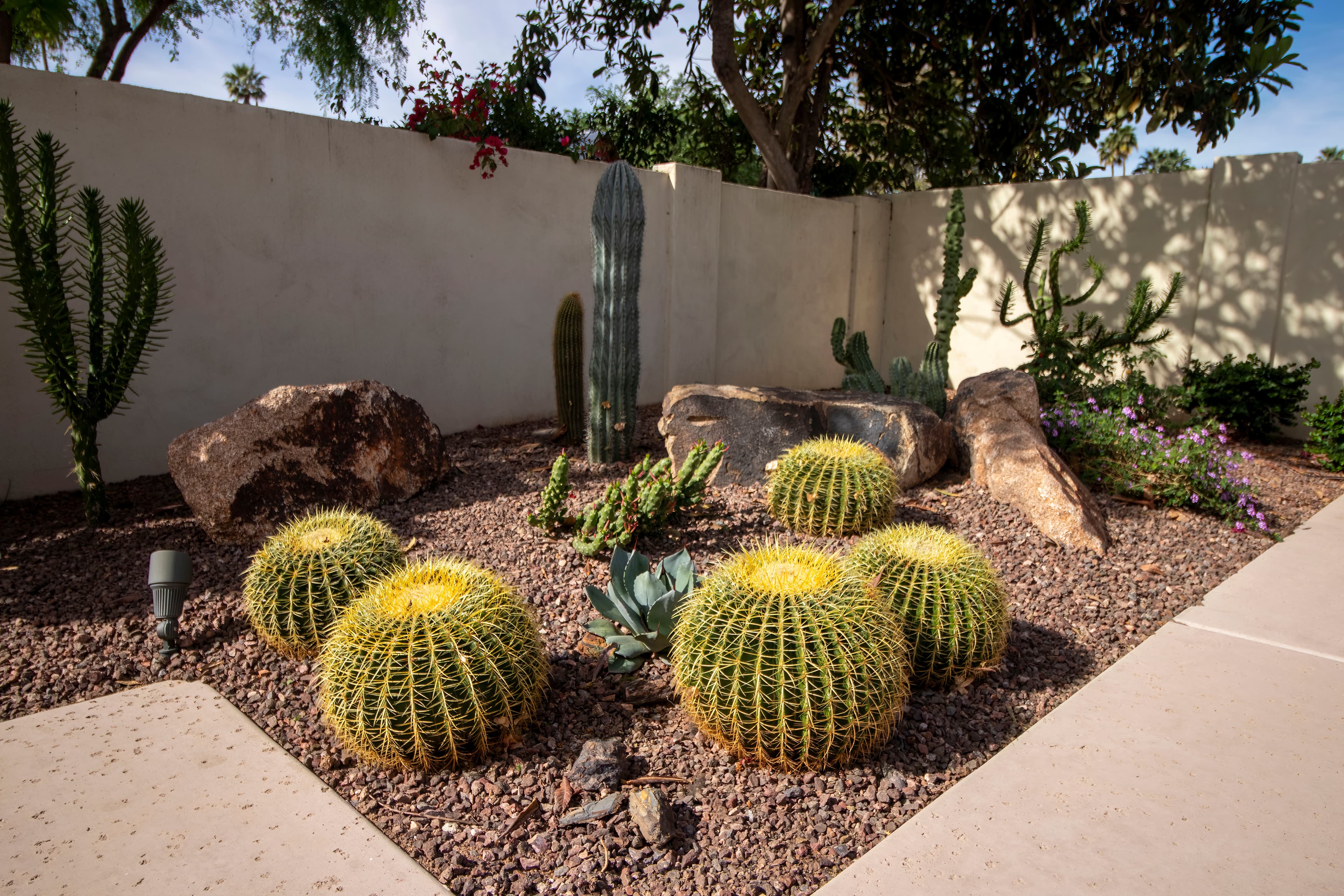
- Inorganic mulches are commonly used in xeriscapes to cover the soil and are considered part of a yard’s hardscape component. Decomposed granite and crushed rock are the types of inorganic mulch most commonly used in our area. Both are available in a variety of sizes and colors.
- Organic mulches come from living materials such as grasses, leaves, straw, shredded bark, pine needles, or compost. They help condition the soil, inviting earthworms to aerate it and naturally reducing soil compaction. As they decompose, organic mulches add nutrients like potassium, nitrogen, phosphorus, and trace elements to the soil. However, due to their decomposition, they need to be replaced regularly.
Tips for Selecting Mulch
Other Ways to Add Color
Although hardscape, structures and plants are the primary components of outdoor spaces, there are many ways to introduce color and interest.

- Outdoor artwork can include ornamental doors and metalwork.
- Colorful fabrics on seat cushions, umbrellas, and awnings can brighten the yard all year.
- Paint applied to walls, fences, trellises, and yard furniture can enhance a landscape and highlight specific areas in the yard.
Before you Start
Check the rules
During the research process, don’t forget to consider any guidelines or restrictions imposed by your city, builder or homeowners association. Now is the time to review these and plan for any necessary applications or approvals.
Digging for any reason? Arizona811.com
Contact Arizona 811 by phone (811) or web (arizona811.com) at least two full business days before digging for free assistance in locating underground power lines and other utilities. It’s the law, and it’s for your safety.