
Landscaping with Style
Draw the Preliminary Plan
Design
The best way to design a house is to develop a plan and make a drawing. The same principle applies to landscaping. It is easier to visualize your plan when it’s put on paper. Drawings ensure all landscape components are the correct size and in appropriate locations. Changes are more easily made with a drawing, which also provides a permanent record of all the plants, hardscapes, and irrigation materials used in your yard.
Get Organized
- Before drawing the preliminary design, review your wish list.
- Look at the notes you made about your existing site in Step Three to determine the best locations for each of the features you want to include in the landscape.
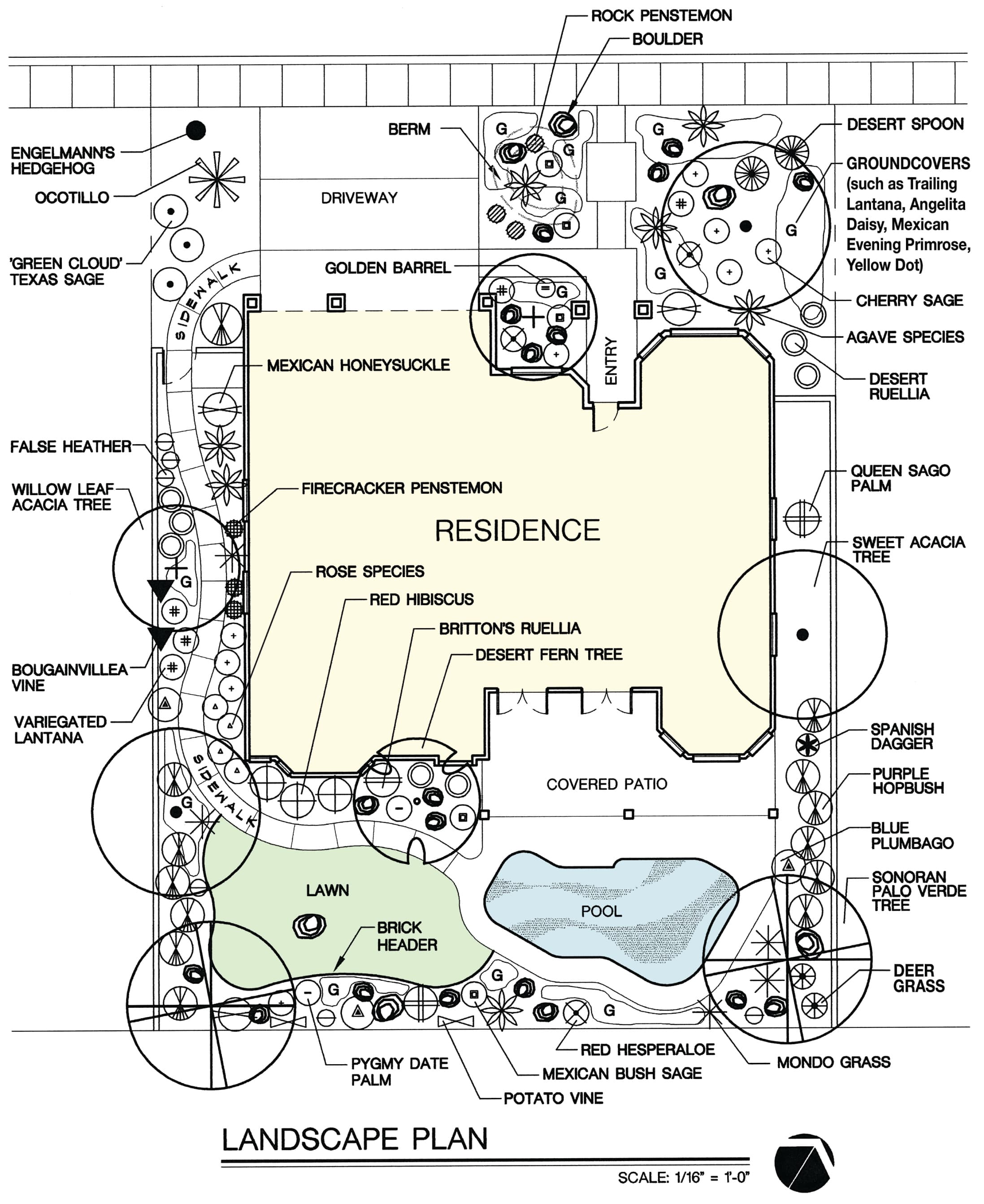
- Placing tracing paper over the site drawing will allow you to experiment easily with different design alternatives before making decisions. A sample landscape design is shown to the right.
- Software and online tools are also available to help you during the design process.
Draw in the Hardscape
Begin by drawing in any hardscape elements you want to include in the landscape. If possible, draw them to scale.
Grading, Contouring, and Harvesting
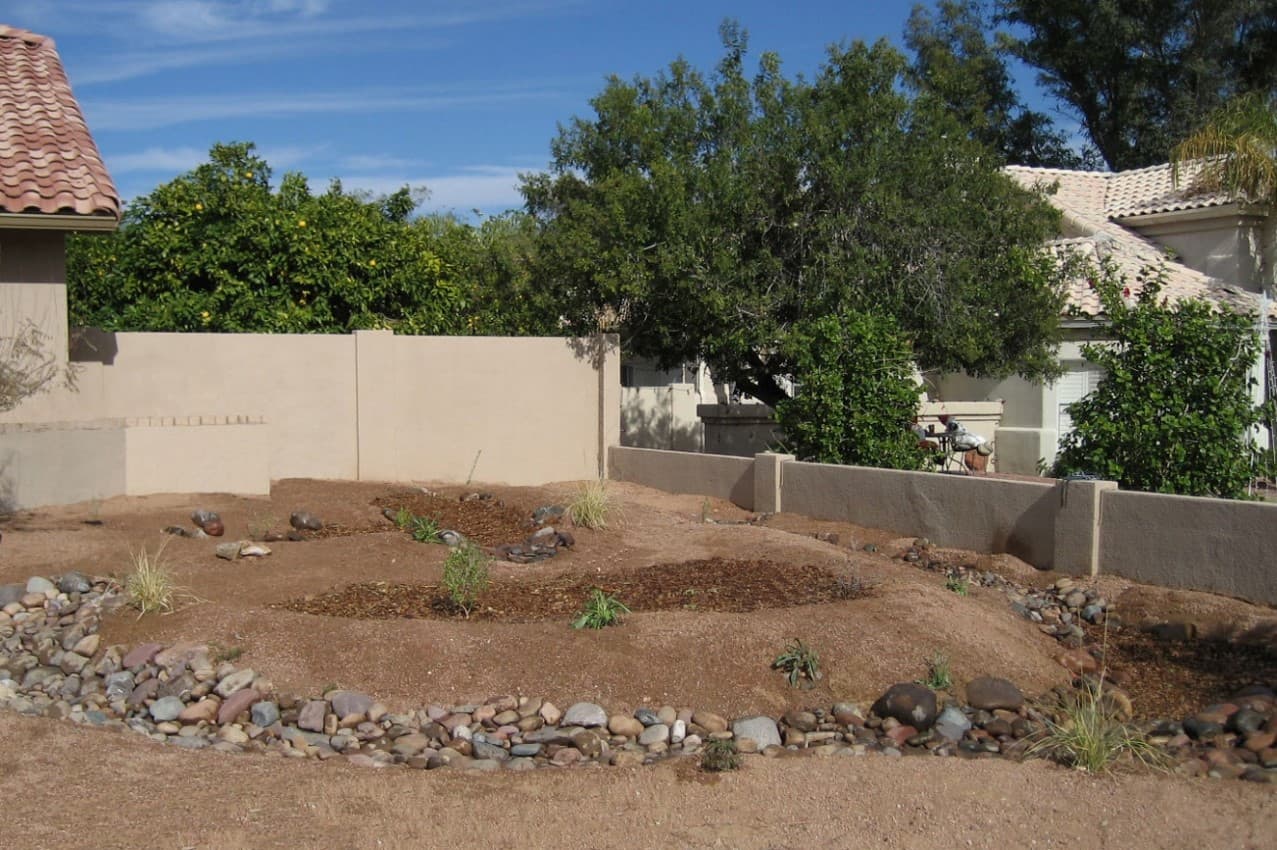
- Mark areas where grading and contour changes are to be made.
- Grading may be used to add interest to a landscape and to direct drainage away from hardscaped areas.
- When planning grading and contour changes, make sure that modifications are made in accordance with the rules established by your city for onsite water retention and proper placement of the backflow preventer. If you need clarification, contact your city.
- Be a good neighbor. Don’t change the grade in your yard so that it redirects water into your neighbor’s yard. Also, avoid making changes that would direct water toward the foundation of your house.
- Consider water harvesting opportunities. You can use existing contours to collect rainwater for use by landscape plants or you can regrade part of the lot to create catchment areas for rainwater. Rooftop runoff can be directed through gutters and channels toward trees and plants.
Rainwater Harvesting Tips
Rainwater harvesting refers to the process of collecting and storing rainwater from surfaces (like your roof) for later use or directing it straight to your plants.
Passive Harvesting
This is the easiest and most cost-effective method. Instead of letting water run off your property, reshape your landscape to hold it.
- Create Basins: Dig shallow depressions (3–6 inches deep) around your trees and shrubs.
- Install Swales: These are “trenches on contour” that slow down water as it moves across your yard, allowing it to soak in deeply.
- Mulch Heavily: Use wood chips or rock to cover these basins. This prevents evaporation and keeps the soil cool.
Active Harvesting
If you want to save water for the dry months (looking at you, June), you’ll need storage.
- Rain Barrels: A great entry point. Connect them to your downspouts. Just make sure they have a screen to keep out mosquitoes!
- Cisterns: For the serious harvester, larger tanks (200+ gallons) can store enough water to keep a small garden going through a dry spell.
Direct Your Downspouts
Most Arizona homes have downspouts that discharge water onto a driveway or directly onto the foundation.
Incorporate Plants into the Design
It is not necessary to make a realistic drawing of each plant. Most landscape architects and designers use symbols such as circles to represent plants on their landscape plans. For each plant, draw a circle in a size that represents the plant at maturity (when it is largest in size).
When placing plants, consider their growth characteristics, as well as their water and sun/shade requirements:
Trees & Large Cacti
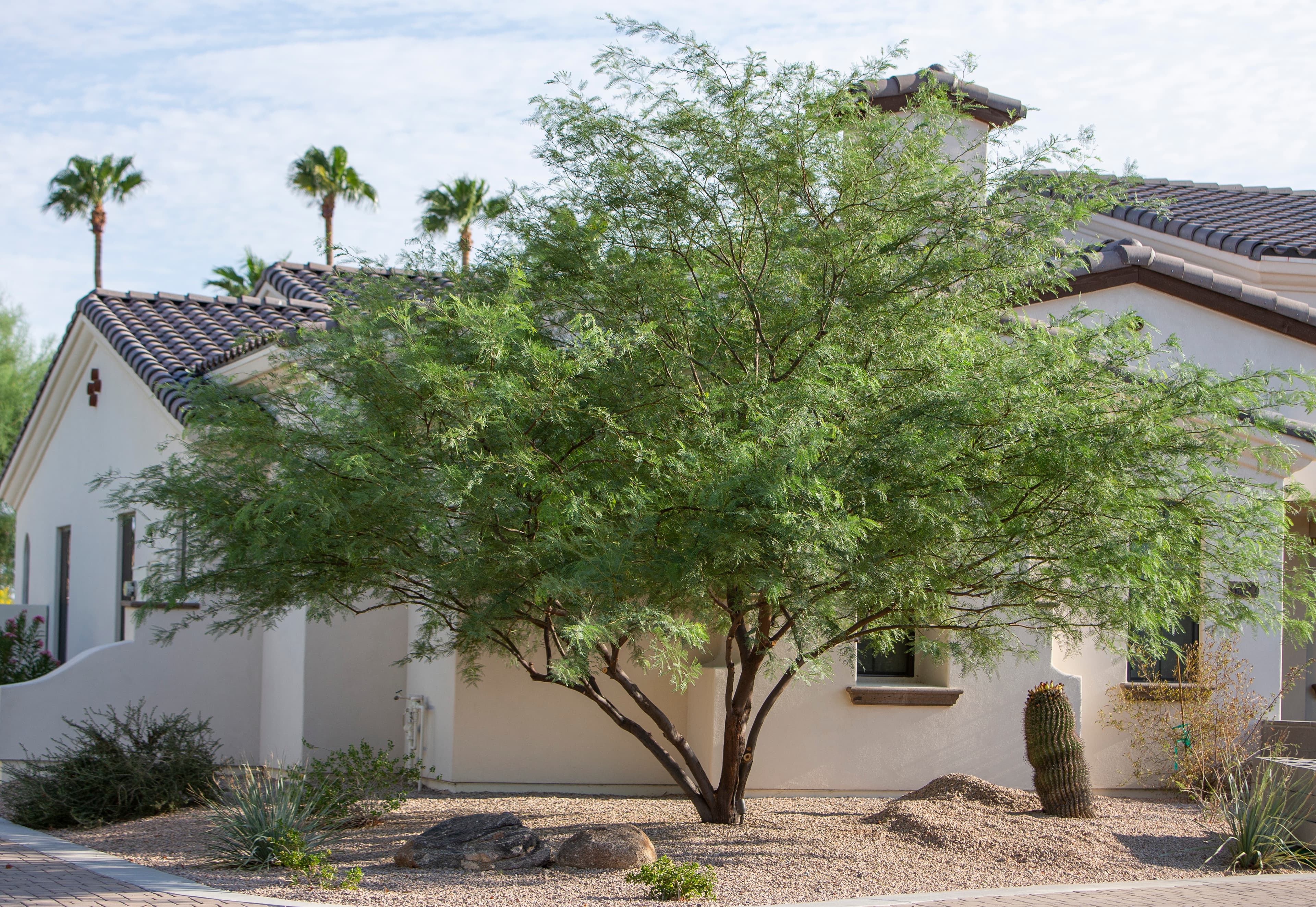
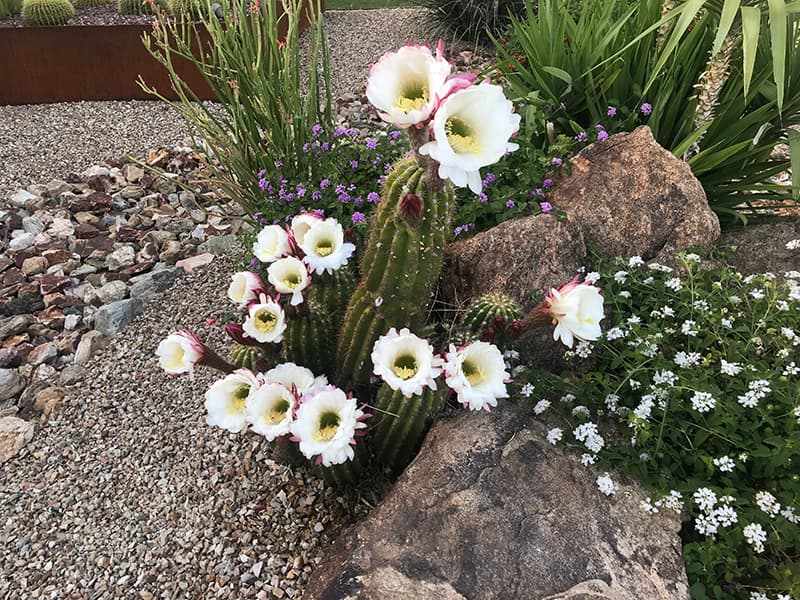
Trees and large cacti, like saguaros, comprise the “backbone” of the landscape since they are permanent and clearly visible year-round. Place trees first.
Shrubs
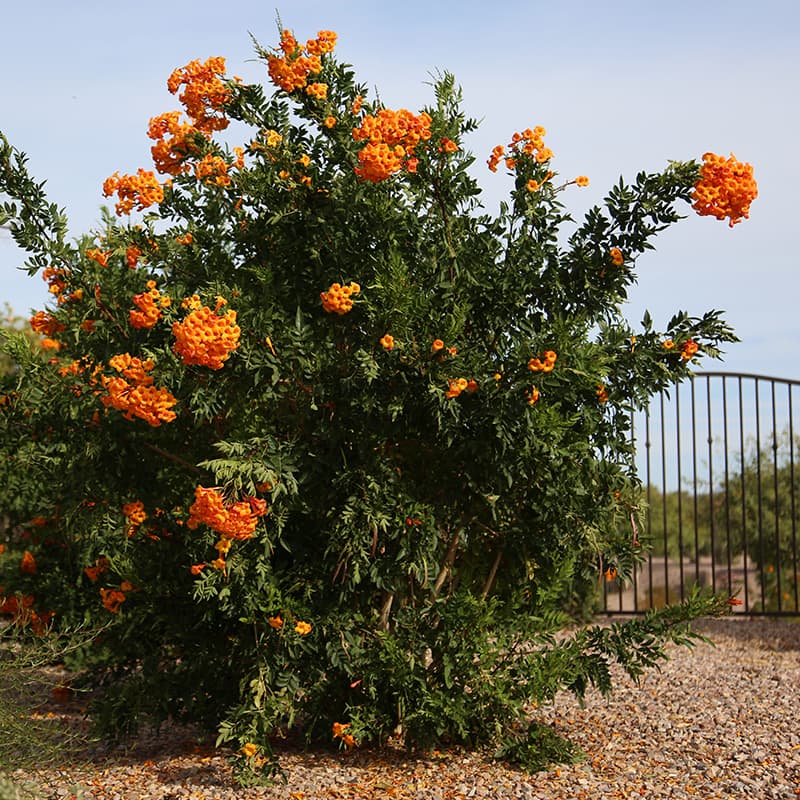
Shrubs can break up large spaces and visually anchor a home to the site. They can also screen out undesirable views, soften the look of walls and fences, and filter harsh reflective sunlight.
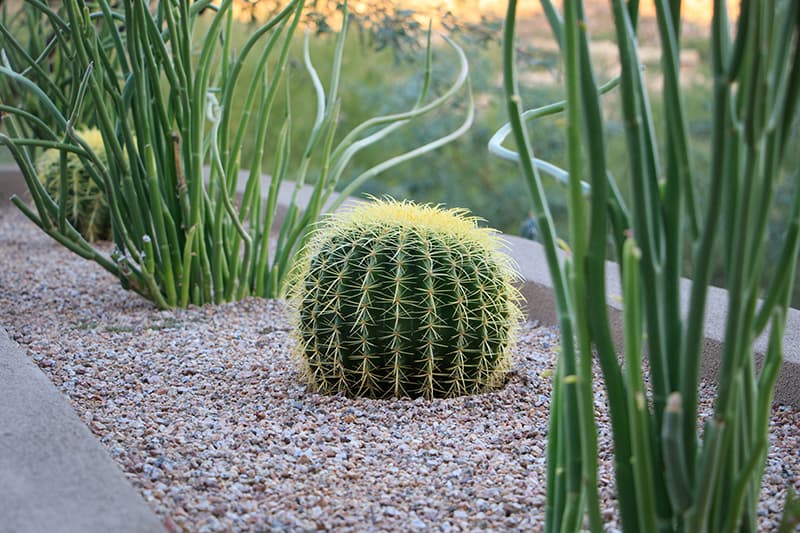
Groundcover, Vines and Accent Plants
Rethinking Grass In The Desert
You can significantly reduce your outdoor water use by creating a desert-adapted landscape. Drought-tolerant plants and trees need less maintenance and water than lawns, especially when irrigated properly. However, if you currently have grass or are considering installing some - whether natural or artificial - it is essential to have all the facts to ensure you make the right decision. After all, practical, water-wise changes in our desert climate will positively influence your community's water future.
Grass requires a significant amount of water, so use it sparingly. If you appreciate the lush green appearance of grass, consider achieving a similar look with desert-adapted groundcovers or a blend of drought-tolerant turf and desert-friendly plants. If you opt to plant a usable area, consider the following:
- Make grass areas functional and only as large as necessary.
- Design your grass area with a simple shape to facilitate efficient irrigation and mowing.
- Place turf away from sidewalks, fences, and walls for easier maintenance. Properly caring for your turf will reduce water usage and maintenance while keeping it looking its best.
Before determining if synthetic turf is the right choice for your yard, consider the following other factors:
- Will kids and pets play on the artificial turf? There are safety concerns with synthetic turf, which is often too hot for children and pets to play on.
- How much maintenance are you willing to perform? Artificial turf is not maintenance-free.
- What will go on the artificial turf? Patio furniture, grills, fire pits, and other combustible heat sources can cause severe damage.
- What is the longevity of your investment? Artificial turf does not last forever.
Visit our grass webpage for more information.