
AMWUA Blog
BY: Warren TenneyReclamation’s Colorado River proposals threaten the national economy
The state of the Colorado River is bad. Drought persists in the river basin, and the rules governing how the seven Basin States share water when there is not enough to go around expire at the end of this year. Those states cannot find consensus even after nearly three years of negotiations on how the river should be managed after 2026. A changing climate means the river is producing less water, with Lake Mead and Lake Powell at critically low levels. Compounding an already bad crisis, the U.S. Bureau of Reclamation is proposing significant cuts to stabilize the whole system, but the bulk of those reductions would fall on Central Arizona, with none on the Upper Basin States (Colorado, New Mexico, Utah, and Wyoming). This is unacceptable and ignores the devastating ramifications for our national economy.
The Bureau of Reclamation recently released a massive 1,600-page Draft Environmental Impact Statement (EIS) that analyzes a range of alternatives for managing the Colorado River over the next 20 years. This document is a mandatory step to establish new operating guidelines before the current rules expire at the end of 2026.
Currently, the total water storage in the Colorado River system is just 38% full (down from 42% a year ago). With the River producing less water due to an unrelenting drought and overall hotter and drier conditions in the Basin, the Draft EIS starkly projects those conditions only worsening over the next 20 years and increasing the threat of the system crashing. To minimize risk to the system, Reclamation is projecting under current conditions an average cut of 2.4 million acre-feet from a river that has produced an average of just 11.1 million acre-feet annually over the last five years. If hydrologic conditions worsen, 3 to 4 million acre-feet could be necessary to prevent Lake Mead and Lake Powell from dropping to critically low elevations.
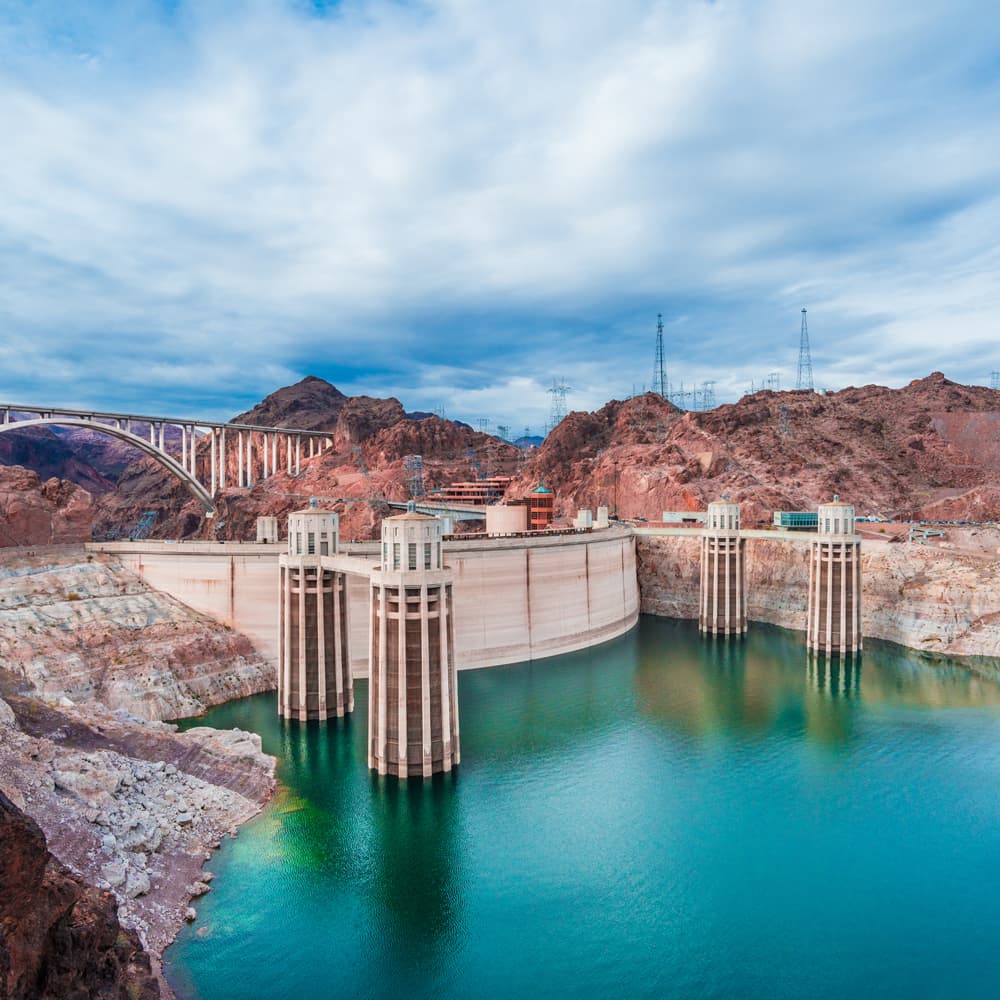
Even those alternatives presented by Reclamation may not be enough. It is troubling that the Draft EIS fails to consider alternatives that could avoid overall system failure. Depending on the chosen alternative, dead pool—when water from Lake Mead cannot pass Hoover Dam and flow downstream, stopping electricity generation—occurs in 9% (for the most optimistic projections) to 70% (for the most pessimistic) of the modeled futures within 20 years. Coming close to or hitting dead pool would be a national disaster.
It is bad enough that the significant shortages identified may not prevent dead pool. What is more troubling about the Draft EIS is that, despite years of collaboration, Reclamation places these daunting cuts solely on the Lower Basin States (Arizona, California, and Nevada), which, if distributed on a priority basis, means Central Arizona bears the brunt. The Draft EIS requires nothing from the Upper Basin States. It fails to analyze the Upper Basin’s delivery obligations to Lower Basin States or how deliveries from reservoirs above Lake Powell could be used to protect the system. Reclamation even asserts that it does not have the authority to institute direct cuts to Upper Basin water users. It is implausible that Reclamation, as the owner of the Colorado River dams and other infrastructure in the Upper Basin, is not vested with the basic authorities necessary to protect its infrastructure, including the authority to implement cuts in the Upper Basin to prevent the system from crashing.
Reclamation’s alternatives in the Draft EIS would cause significant reductions to the Colorado River water delivered by the Central Arizona Project (CAP) and utilized by AMWUA cities, Tucson, other municipal providers, and tribes. In fact, a dry or nearly dry CAP canal could occur if all cuts are taken solely by the Lower Basin and applied in priority. In other words, the Colorado River water used by the ten AMWUA cities and others could be cut by 35% to 100%, possibly as soon as next year. The AMWUA cities have been preparing for a 20% reduction based on previous proposals.
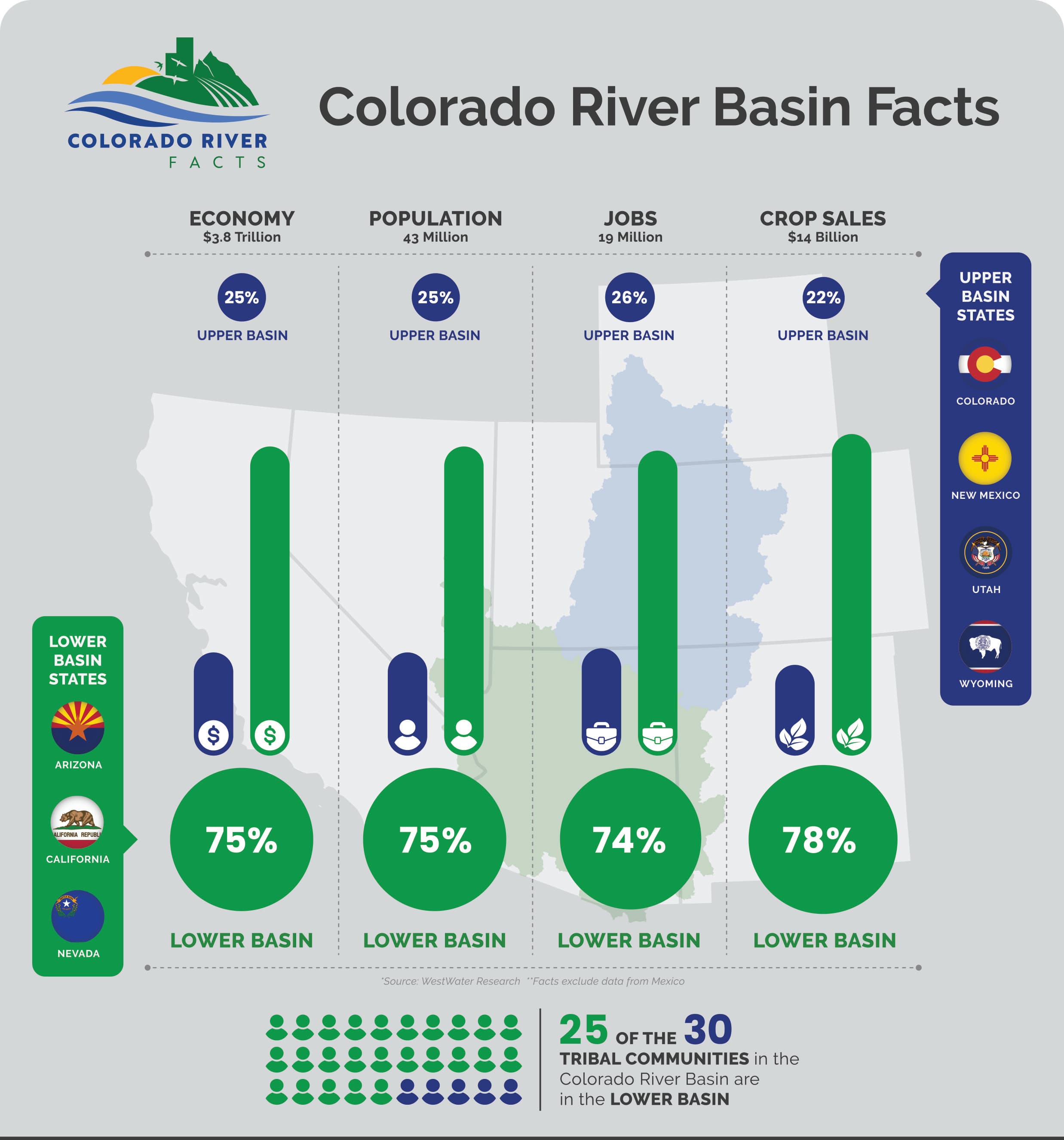
Graphic: Coaltion for Protecting Arizona's Lifeline
One might assume that the effects of a completely dry CAP, a major piece of federal infrastructure supplying water to 80% of Arizona’s population and several key industries, would have a substantial negative impact on the national economy. However, the 1,600-page Draft EIS offers no analysis of the economic consequences. The ten AMWUA cities and Tucson provide water to 4.7 million residents, as well as numerous businesses, financial institutions, universities, and critical industries, including semiconductor manufacturers vital to our national security and economy. Reclamation does not consider the repercussions if a community cannot meet its residents' water needs because its Colorado River supply is cut so drastically, nor does the Draft EIS analyze the overall economic impact of these proposed reductions on the economies of the Phoenix and Tucson metro areas.
If one Central Arizona municipal provider is even perceived to, or in reality, cannot meet the water needs of its community, it will deal a seismic, chilling blow to Arizona’s economy, rippling through the other Basin States and destructively impacting the national economy. Reclamation’s draft EIS is setting up that reality by not managing the Colorado River as a whole throughout the Basin, but instead heaping the burden of stabilizing the Basin on the shoulders of those already bearing the brunt of the current cuts – Central Arizona. Their own dire projections are imploring the federal government to take bold, decisive leadership to manage the river so that the system remains viable and its infrastructure is protected, so every Basin State and the nation can continue to benefit from the Colorado River.
Time is running out. The ongoing uncertainty about a post-2026 Colorado River is inexcusable. Equitable, sustainable river management that allows the Basin’s and national economies to flourish is possible. But that reality requires either collaboration and consensus among the Basin States (extremely unlikely as of now) or else courage and commitment from the federal government (sorely lacking so far). Municipalities, other Colorado River users, and the national economy deserve a fair, viable plan that requires all seven states to live with a smaller river to secure its future – and ours.
Learn more about the Colorado River’s importance through the Coalition for Protecting Arizona’s Lifeline, a nonpartisan alliance of leaders dedicated to educating, advocating, and emphasizing the significance of long-term water security and economic resilience in our state. www.ProtectingArizonasLifeline.com .
For over 57 years, the Arizona Municipal Water Users Association has worked to protect our member cities’ ability to provide assured, safe, and sustainable water supplies to their communities. For more information, visit www.amwua.org.