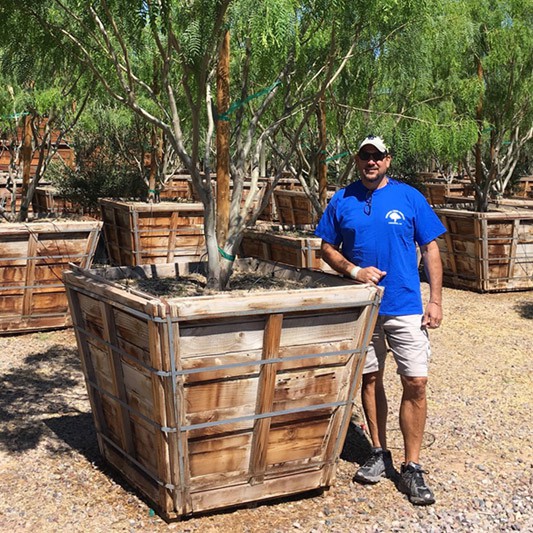
Under normal conditions, it is not necessary to stake trees after planting if they can stay upright on their own after the nursery stakes are removed. In very windy areas it may be helpful to stake trees for a while even if they are able to stand on their own. This will give new trees a little extra anchorage. In any case, staking should be temporary. Staking trees improperly or for too long can weaken or damage them.
The Health of Your Trees is at Stake
Here are some guidelines for staking newly planted trees:
- Use two wooden stakes, preferably two inches round or square. Place stakes outside of the root ball, inserting them at least six inches below undisturbed soil (go at least six inches below soil that has been tilled in preparation for planting).
- Ties should be made of smooth, flexible material such as horticultural tape, nylon tree ties, or wire securely wrapped in rubber tubing. Grasping the trunk with one hand, find the point on the tree trunk where the tree will stand upright. Place the ties six inches above this point.
- Loop the ties around the trunk and secure them to the stake. Ties should support the trunk but should not inhibit movement (trunk and ties should move as a unit). This is important for proper trunk development.
- To minimize damage to tree limbs, cut the stakes four to six inches above the tie.
- Check staked trees periodically, preferably once a month, and loosen the ties as needed. Ties that dig into the trunk can damage the tree.
- Remove the stakes as soon as a tree can stand on its own; almost always within one year of installation.